








Medication-Free TMS Therapy for Depression in New Jersey
Transcranial magnetic stimulation (TMS) is an exciting treatment option if you’re seeking a medication-free approach to depression. It can also feel refreshing if you haven’t made lasting progress using talk therapy. While TMS can be used in conjunction with talk and behavioral therapies, it gives patients an opportunity to treat depression symptoms from a neuro perspective. This can take the pressure off if the lack of progress with therapy is actually exacerbating your feelings of despair and hopelessness. Patients and practitioners also like TMS because it offers the benefits of:
- A comfortable, pain-free experience.
- Noninvasive treatment with zero to minimal side effects for most patients.
- No risk for dependence or habit-forming behaviors.
- Fully customized treatments based on your individual brain map.
- Noticeable results that improve mood while also boosting quality of life.
What exactly is TMS? The short answer is that it’s a noninvasive medical treatment that uses magnetic pulses to stimulate parts of the brain associated with depression symptoms. The longer answer is that it is a doorway to neurogenesis that helps people struggling with depression to rewire their brains. Currently, TMS has FDA approval for treatment-resistant depression (TRD), major depressive disorder (MDD), obsessive-compulsive disorder (OCD), and migraine headaches. If you’re in the New Jersey area, TMS is available to you. Come learn about this non-drug treatment option for depression to see if it’s something you should consider.
The Basics of TMS: How Does TMS Work?
TMS uses magnetic pulses to stimulate specific areas of the brain. Practitioners map out treatments to target specific regions of the brain associated with depression symptoms. These regions have actually been shown to be inactive or less active when a person is experiencing depression symptoms.
Stimulation can help to “wake up” these regions and increase cellular activity. It essentially works as a way to rewire the brain without surgery. There’s even some evidence that TMS has a neurogenesis effect that essentially helps the brain to create new cells. While impressive, this isn’t surprising to researchers who have observed that many patients who undergo TMS report things like better focus and mental clarity in addition to the well-established mood improvements associated with TMS treatments.
What Research Says About TMS
Multiple studies published over the past decade show TMS’s safety and efficacy. The newest research indicates that TMS’s success rate can be as high as 80%. A recent double-blind controlled study utilizing high doses of magnetic brain stimulation on an accelerated timeline found that 79% of trial participants with severe depression experienced remission.
What to Expect When You Start TMS Treatments in New Jersey
There’s no need to be intimidated when booking your first TMS session in New Jersey. While TMS may seem novel or new in the mainstream media, treatments have been developed, tweaked, and tested over decades. Patients have been using TMS to treat symptoms of major depression for years.
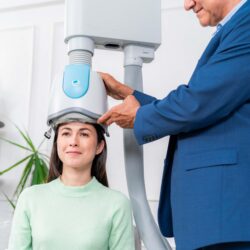
The first thing to know is that your treatment will be 100% individualized. In order to make sure your treatment plan is as targeted and effective as possible, your practitioner will need to perform 3D mapping. This will require an in-person visit where a magnetic coil is placed on your head. You will experience some light taps and clicking sounds as your practitioner finds your motor threshold. The rest of your treatment plan might look something like this:
- While frequencies can vary, you should expect to visit the clinic up to five days a week for four to six weeks at the start of treatment.
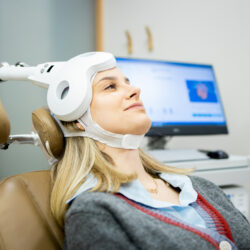
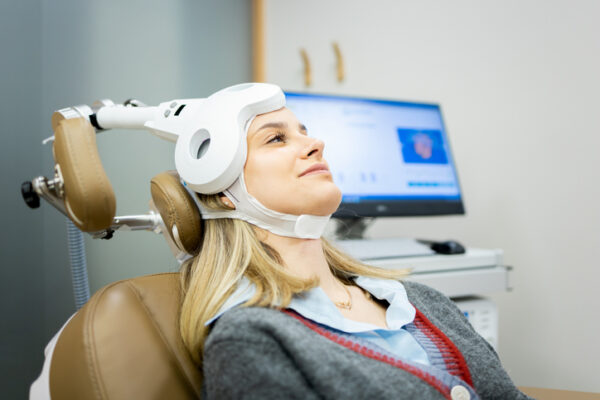
- During each appointment, you’ll simply relax in a chair while wearing earplugs and a magnetic coil. While some patients feel nothing during treatment, you may experience some light tapping or minimal scalp discomfort.
- Sessions can last anywhere from 10 minutes to 30 minutes.
- After completing around 30 sessions in total during a six-week period, your practitioner will discuss changing your appointment frequency. Based on your individualized plan and progress, you might expect session frequency to be reduced to weekly or every other week. Your practitioner will also discuss options for maintenance anywhere from a few months to a few years down the road to help prevent symptom relapses.
Does TMS Have Side Effects?
Most people don’t have side effects from TMS. If you do experience any, you can expect them to be mild and temporary. Some common TMS side effects include:
- Headache
- Ringing in the ears
- Dizziness
- Slight tingling in the head and face
- Facial twitching
- Scalp discomfort
- Fatigue
- Jaw pain
- Sensitivity to sounds
Always let your practitioner know if you experience any adverse sensations or reactions. Prior to treatment, your practitioner will ask questions about your personal history with epilepsy or seizures to ensure that this is a safe and appropriate treatment for you.
Come Learn More About TMS for Depression in New Jersey
Oasis Mental Health Centers can provide you with customized TMS at our world-class facilities in New Jersey. Our highly rated TMS treatment centers utilize BrainsWay Deep TMS technology to deliver precise and targeted therapy. TMS could be the right choice for you if you’re unhappy with the side effects caused by traditional antidepressants used to treat depression or if you’re not getting results from depression medications. Come experience a medication-free treatment for depression that is changing lives. Book a consultation with Oasis Mental Health Centers today.
Sources:
https://pmc.ncbi.nlm.nih.gov/articles/PMC10387872/
https://med.stanford.edu/news/all-news/2021/10/depression-treatment.html
https://pmc.ncbi.nlm.nih.gov/articles/PMC4468834/
https://www.sciencedirect.com/science/article/pii/S1388245724003766
https://www.mayoclinic.org/tests-procedures/transcranial-magnetic-stimulation/about/pac-20384625