






3 Noninvasive Ways to Treat Severe Depression That Aren’t Talk Therapy
Not making progress in talk therapy doesn’t mean that you have failed. For people with severe depression, talk therapy often isn’t enough to reduce or eliminate symptoms. Also known as major depressive disorder (MDD), severe depression can be challenging to treat. You may experience intense and persistent sadness, fatigue, loss of interest in life, appetite fluctuations, impaired functioning, and thoughts of self-harm that consume every day.
Let’s be clear. Talk therapy can work wonders for many people living with depression—especially when combined with other treatments. However, research on talk therapy success rates for depression finds that more than half of patients receiving therapy do not respond. Fortunately, talk therapy isn’t your only option if you’re struggling with severe depression or MDD. There are several noninvasive, effective treatments that can be used alone or in combination with traditional therapy.
1. Transcranial Magnetic Stimulation (TMS)
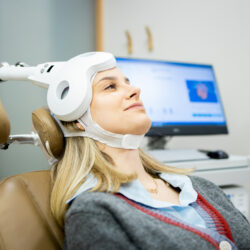
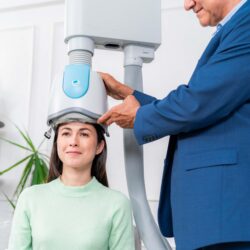
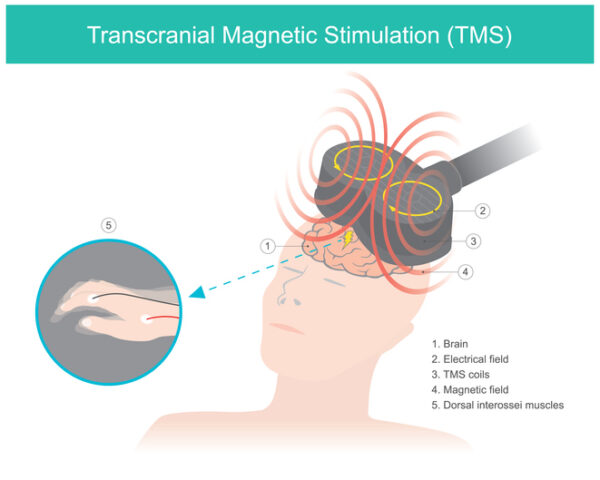
TMS is a noninvasive medical treatment that uses magnetic pulses to stimulate nerve cells in the brain. It currently has FDA approval for MDD, obsessive-compulsive disorder (OCD), migraine headache, and smoking cessation. The mechanism behind TMS involves an electromagnetic coil that’s placed on your head. During treatment, this coil delivers magnetic pulses that stimulate nerve cells in the parts of the brain associated with mood. These pulses help to activate or “wake up” areas of the brain shown to have decreased activity during depression. In fact, researchers have found evidence that neuromodulation through TMS may induce neurogenesis.
TMS has been proven to be highly effective in treating depression. One double-blind controlled study using high doses of magnetic brain stimulation on an accelerated timeline found that around 80% of patients with severe depression experienced remission.
What Is TMS Treatment Like?
TMS sessions are brief, noninvasive experiences for patients. As a patient, your treatment protocol will be specially developed for you. However, the protocol generally involves several 10- to 30-minute sessions per week. Your practitioner will start by simply “mapping” your treatment protocol using an electromagnetic coil that will cause a gentle tapping sensation. During ordinary treatment sessions, you’ll sit comfortably in a chair wearing earplugs with a magnetic coil placed on your head. While this is a painless treatment, some patients do experience slight scalp discomfort. Some patients also report mild and temporary post-treatment side effects that include headaches, dizziness, ringing in the ears, and muscle tingling in the face and scalp.
2. Bright Light Therapy (BLT)
BLT can be a great low-effort, highly accessible treatment for people with major depressive disorder or seasonal affective disorder (SAD). The concept is simple. A standard BLT treatment involves daily morning sessions with a 10,000-lux light box that mimics natural sunlight. Practitioners generally recommend sessions first thing in the morning to recreate the effect of experiencing early morning sun. The thought is that this will help to reset brain rhythms to improve mood and naturally balance sleep-awake cycles. Each session should ideally last around 30 minutes.
A 2024 meta-analysis of 15 randomized controlled trials found that bright light therapy is effective for alleviating depressive symptoms among people with major depressive disorder. This particular analysis found that a two-week treatment with 60 minutes of daily bright light exposure was ideal for getting results while balancing patient costs. Another analysis published in 2025 found that BLT is an effective adjunctive treatment for nonseasonal depressive disorders. This analysis found that BLT may improve the response time when other treatments are involved.
Esketamine (Spravato®) Nasal Spray for Rapid Relief
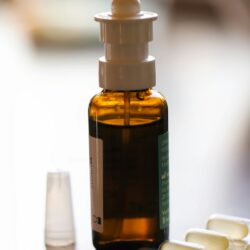
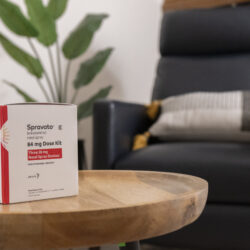
Used most commonly as an FDA-approved nasal spray with the brand name of Spravato, esketamine can provide quick relief for individuals struggling with severe depression and/or treatment-resistant depression. Esketamine is always administered in a clinical setting under the care and supervision of a licensed healthcare professional. Some benefits of Spravato over traditional antidepressants include:
- Fast Action: Esketamine as a nasal spray instantly enters the bloodstream via the nasal cavity to produce quick relief. Most patients experience changes in a matter of hours. In contrast, most antidepressants take four to six weeks to take full effect. This is why Spravato is considered a life-saving medication in acute situations.
- Targeted Results: Esketamine isn’t like other antidepressant medications because it works on glutamate and other NMDA (N-methyl-D-aspartate) receptors to form new neural pathways, repair impaired brain connections, and boost overall neuroplasticity.
- Risk Reduction: In clinical studies, Spravato has been shown to rapidly reduce depression symptoms in MDD with acute suicidal ideation or behavior.
Esketamine isn’t available as an ordinary prescription. During treatment, you’ll come into an office to have Spravato administered via a convenient, noninvasive nasal spray. Patients are monitored for a minimum of two hours following treatment.
Talk to Caring Professionals About Depression Treatment Beyond Talk Therapy
Feeling boxed in by depression treatments can be frustrating. That’s why we, at Oasis Mental Health Centers, offer a variety of innovative treatments. Our practitioners provide options like TMS and Spravato to create a way forward when treatments like talk therapy and traditional antidepressants haven’t worked for you. Reach out to us today to learn about the treatments available to you.
Sources:
https://my.clevelandclinic.org/health/treatments/17827-transcranial-magnetic-stimulation-tms
https://pmc.ncbi.nlm.nih.gov/articles/PMC6649915/
https://pmc.ncbi.nlm.nih.gov/articles/PMC6649915/
https://med.stanford.edu/news/all-news/2021/10/depression-treatment.html
https://www.uclahealth.org/news/release/study-finds-possible-early-predictor-successful-transcranial
https://www.ncbi.nlm.nih.gov/books/NBK430661/
https://pmc.ncbi.nlm.nih.gov/articles/PMC8457213/
https://pmc.ncbi.nlm.nih.gov/articles/PMC8407443/
https://www.mayoclinic.org/diseases-conditions/depression/in-depth/treatment-resistant-depression/art-20044324
https://pubmed.ncbi.nlm.nih.gov/39356500/
https://www.sciencedirect.com/science/article/abs/pii/S1876201824002429