| | | | | |
|---|
No anesthesia or sedation | | | | | |
|---|
Drive yourself home after | | | | | |
|---|
| | | | | |
|---|
| | | | | |
|---|
Zero downtime, back to your day | | | | | |
|---|
FDA-cleared or approved for depression | | | | | |
|---|
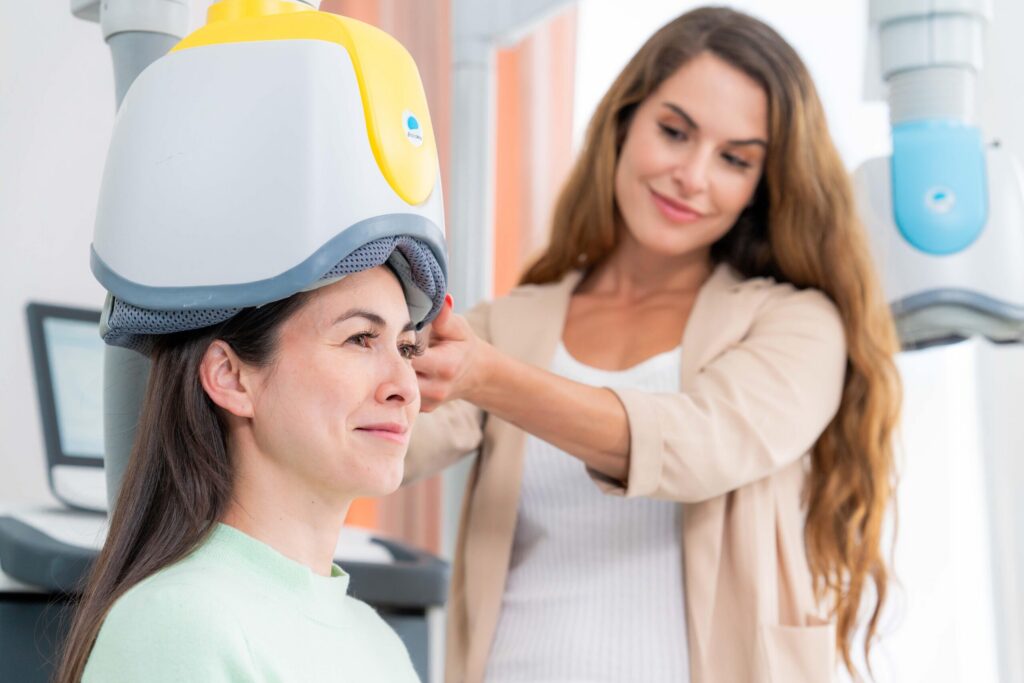
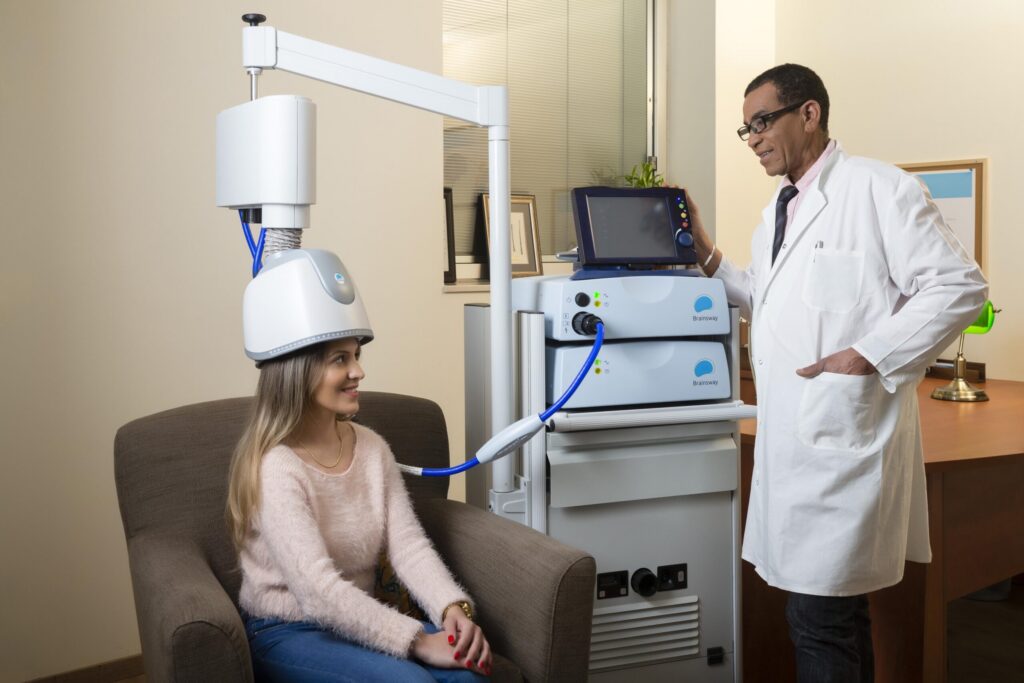
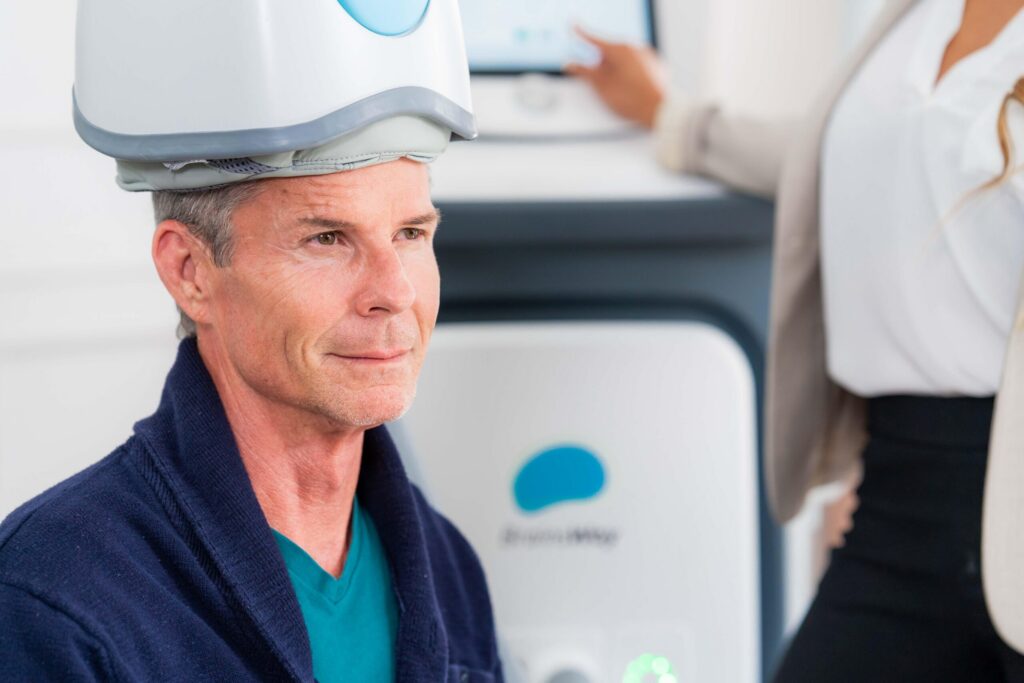
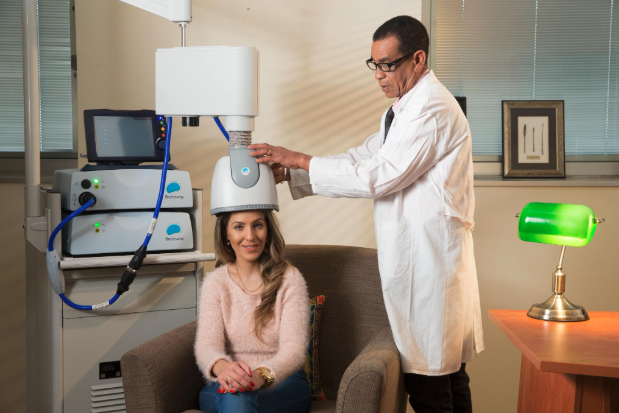
| Focused magnetic pulses stimulate the brain areas that regulate mood. No drugs, no surgery. | Brief, controlled electrical stimulation under anesthesia triggers a short seizure that can reset brain chemistry in severe depression. | Daily pills that adjust brain chemistry body-wide. | Nasal spray that acts on glutamate, a different pathway than standard antidepressants. Given in-clinic with monitoring. | Regular sessions with a therapist to change patterns of thought and behavior driving depression. |
|---|
| 5 days a week for 4 to 6 weeks. Sessions run 20 to 40 minutes. | 2 to 3 times per week for 2 to 4 weeks. Half-day appointments with prep and recovery. | A pill a day. Each drug takes 4 to 6 weeks to judge; many people try several. | Twice a week for 4 weeks, then weekly. Every visit includes 2-hour monitoring. | Weekly 45 to 60 minute sessions for months, ongoing as needed. |
|---|
| Mild scalp tingling or headache in early sessions. Fades for most people. | Headache, muscle soreness, confusion after treatment. Short-term memory gaps. | Weight gain, sexual side effects, nausea, sleep changes, mental fog. Varies by drug. | Dissociation, dizziness, nausea, blood pressure rise during monitoring. | None physical. Sessions can feel emotionally heavy. |
|---|
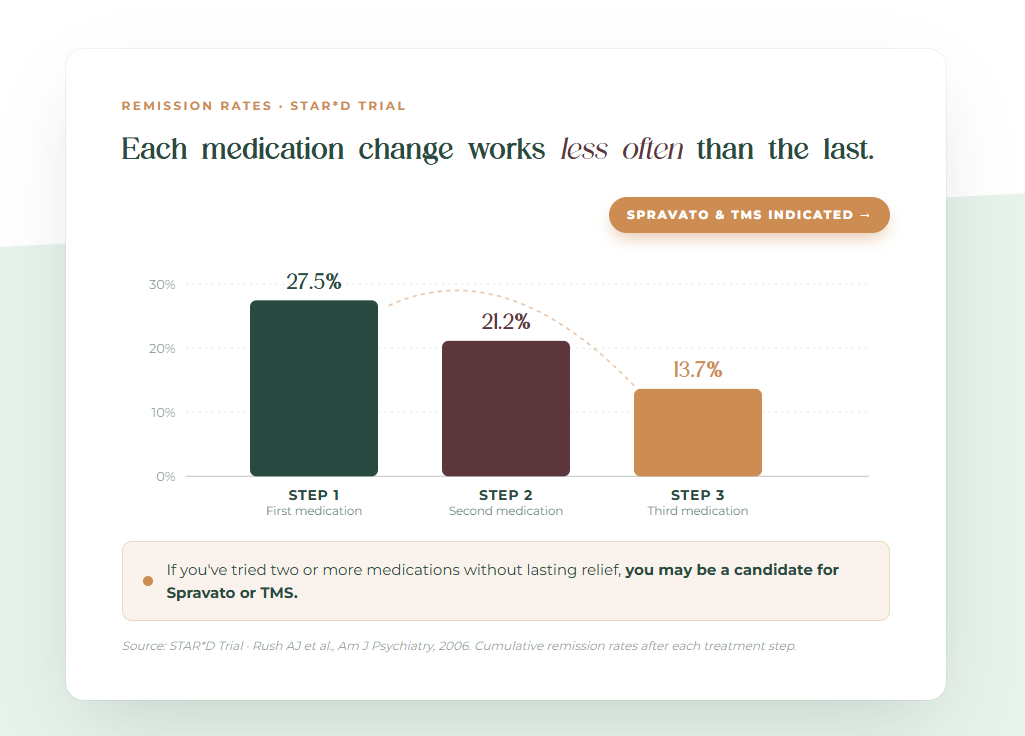
| Depression that has not lifted with medication, or when drug side effects are intolerable. | Severe, urgent, or highly treatment-resistant depression when rapid response matters. | First-line treatment for most people. Often combined with TMS or therapy. | Treatment-resistant depression in adults already taking an antidepressant. | Mild to moderate depression, or paired with TMS or medication. |
|---|