











If you are living with depression that has not responded to medications or therapy, TMS may already be on your radar. But the cost question stops a lot of people before they even make the call.
Here is what most people do not realize: TMS is FDA-cleared and widely covered by all NJ insurance plans, including Medicare, Medicaid, and Tricare, when certain criteria are met. Whether insurance covers or will cover TMS therapy depends on your specific insurance plan and its eligibility requirements.
Understanding how that coverage works could be the thing that finally makes treatment possible for you.
What Is TMS And Why Do Insurers Cover It?
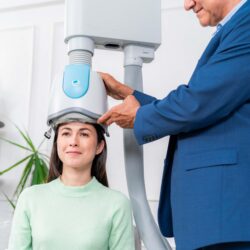
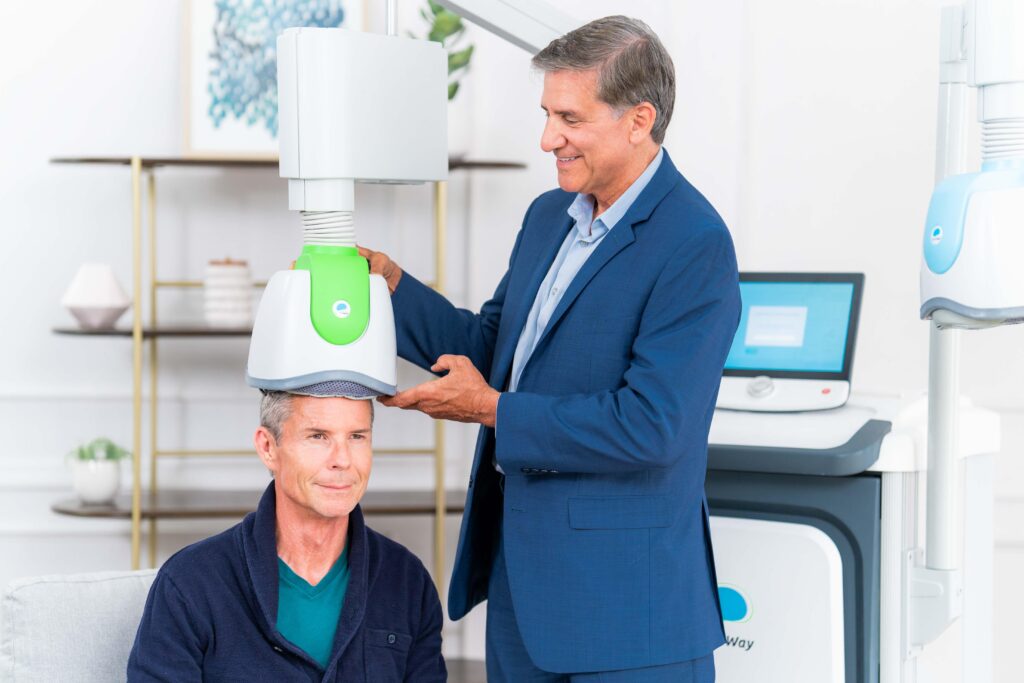
Transcranial magnetic stimulation (TMS) is an FDA-cleared, noninvasive treatment that uses magnetic pulses to stimulate nerve cells in the brain. Grounded in biological psychiatry, it modulates neural circuits and brain mechanisms involved in mood regulation, targeting specific brain regions rather than affecting your entire body the way antidepressant medications do.
Insurance companies increasingly cover TMS because clinical evidence strongly supports its effectiveness for treatment-resistant depression, especially in improving depression symptoms and achieving remission in major depression.
The three conditions currently cleared are:
- Major depressive disorder (MDD) — the most widely covered indication and the primary focus at Oasis
- Obsessive-compulsive disorder (OCD) — covered when using specific FDA-cleared devices such as BrainsWay Deep TMS, which Oasis uses
- Smoking cessation — cleared for adults using specific BrainsWay systems, though insurance coverage for this indication remains limited
If you are seeking TMS for MDD or treatment-resistant depression, you have the strongest case for insurance approval.
Is TMS Covered By Insurance At Oasis Medical Health Centers?
Yes. All NJ insurance plans cover TMS as a depression treatment for Major Depressive Disorder (MDD) and Treatment-Resistant Depression (TRD), including commercial plans, Medicare Advantage, Tricare, and other private insurance companies. Coverage can vary widely depending on your specific plan and provider.
For example, United Healthcare may include TMS therapy in their mental health plans, but coverage decisions can be influenced by specific policy details, so it is important to verify coverage directly with United Healthcare or your insurer.
We commonly work with:
- Commercial insurers (Horizon BCBS NJ, Blue Cross Blue Shield, Aetna, Cigna, UnitedHealthcare, Humana)
- Private insurance companies
- Medicare
- Many state Medicaid plans
- Tricare
We verify your insurance coverage in advance and provide a personalized, written estimate of your out of pocket cost before your first treatment session. Your TMS provider will also handle the necessary paperwork, verifications, and coordination with your insurance company to help facilitate coverage for TMS therapy.
Which Types Of TMS Are Most Commonly Covered?
Different TMS protocols exist, but are all variations of TMS therapy covered by insurance?
Your insurance company will most likely cover all protocols including rTMS and Deep TMS, depending on your plan.
Repetitive TMS (rTMS)
rTMS treatment is the original, widely recognized form of TMS therapy and the most consistently covered by commercial insurance, Medicare, Medicaid in many states, and Tricare. A typical schedule involves 5 sessions per week for 4 to 6 weeks, plus possible taper sessions.
Deep TMS (dTMS)
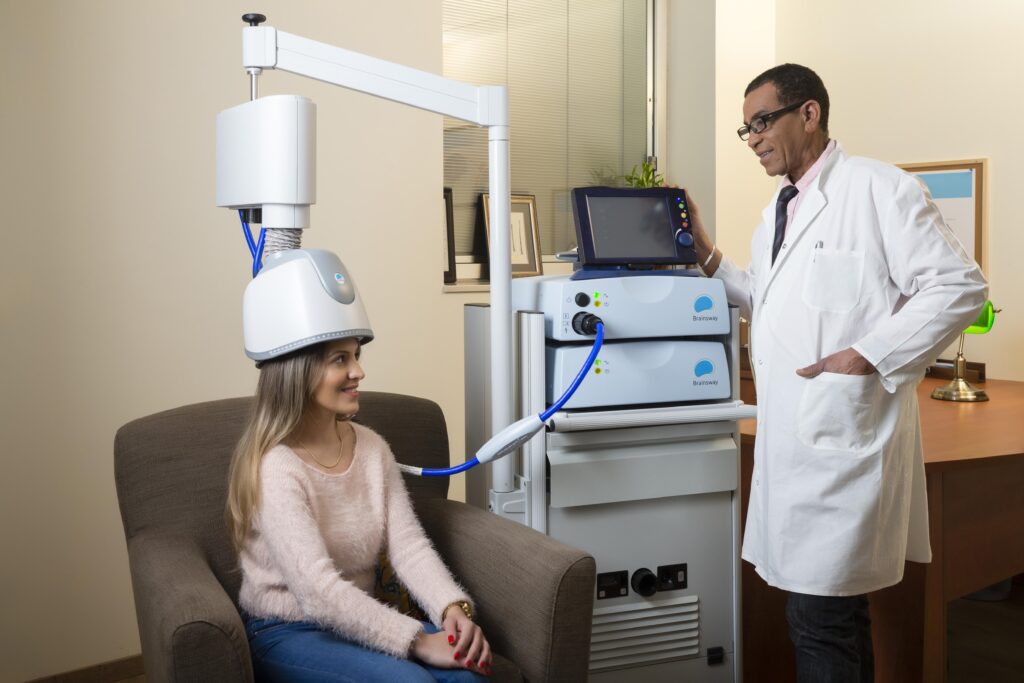
Oasis Medical Health Centers focuses primarily on Deep TMS for treating major depressive disorder and treatment-resistant depression, the most widely covered mental health conditions.
How is it different from Repetitive Transcranial Magnetic Stimulation? Deep TMS uses a different coil design to reach deeper brain regions.
Theta Burst And Accelerated Protocols (iTBS And Similar)
Theta burst stimulation is a shorter, burst-pattern form of TMS, often 3 to 10 minutes per session, that is FDA cleared for depression. However, most insurance companies do not currently cover iTBS, with some insurers still classifying accelerated protocols as investigational.
Others may allow them under the general TMS benefit code once prior authorization is obtained. If you choose a protocol that is not fully covered, Oasis will discuss financing options and payment plans before scheduling.
Typical Insurance Requirements For TMS Approval
Most insurers require patients to meet two broad criteria before approving TMS: a confirmed diagnosis of major depressive disorder and/or treatment-resistant depression, and documented failed trials of antidepressant medications from at least two different drug classes at therapeutic dosages.
Diagnosis And Symptom Severity
A formal diagnosis of moderate-to-severe Major Depressive Disorder (MDD) or Treatment-Resistant Depression (TRD) is required. Insurers typically ask for a documented depression score using standardized rating scales such as PHQ-9, HAM-D, or MADRS. Some policies also allow coverage for anxious depression, but pure anxiety disorders without a depression diagnosis are generally not covered.
Note that coverage may be denied if you have specific contraindications such as a history of seizures or certain metal implants near the head.
Failed Medication Trials
Insurers typically require evidence of documented treatment resistance, such as failure of 2 different antidepressant trials from at least two different drug classes.
An adequate trial usually means around 6 to 8 weeks at a therapeutic dose. Failure can include lack of improvement, partial response with persistent symptoms, or significant side effects.
Psychotherapy And Other Treatments
Some plans require at least one documented failed attempt at evidence-based talk therapy with a licensed professional. Oasis requests therapy records directly from your providers, with your consent, to complete this part of the submission.
The Insurance Approval Process At Oasis Medical Health Centers
Oasis handles the complex parts of dealing with insurance so you can focus on your health. Here is exactly what happens from your first call to your first treatment session.
Step 1: Consultation Call
In just 15 minutes, we learn where you are, answer your questions, and get a preliminary sense of whether TMS is likely to be covered by your plan.

Step 2: In-Depth Consultation And Insurance Verification
We review your medical history and treatment journey so far, then verify your insurance coverage in detail. Our TMS coordinators contact your insurance provider directly to confirm your in-network status, deductibles, copayments, and whether prior authorization is required before starting treatment.
You receive a clear, written estimate of your out-of-pocket costs before anything moves forward.
Step 3: Clinical Evaluation And Medical Necessity Submission
A formal psychiatric evaluation confirms whether TMS is the right fit for your situation. We do not move forward until we are confident it is appropriate for you.
If TMS is not the right fit, we may recommend Spravato, another FDA-approved treatment for treatment-resistant depression.
This step also triggers the medical necessity submission. Oasis prepares and submits all required documentation on your behalf, including your diagnosis, depression severity scores, medication history, and therapy records.
We track the authorization status and handle any follow-up requests from your insurer.
Step 4: Approval And Treatment
If prior authorization is required, we move forward once it is approved. If authorization is not required, we schedule your TMS mapping session and first treatment immediately. Most patients begin noticing slight improvements in their mood and energy within the first few sessions. However, significant results often appear around weeks 4 to 6.
Our clinical team monitors your progress throughout the entire course of treatment, and we handle all billing and claims directly with your insurer.
What Does TMS Cost With Insurance Versus Self-Pay?
TMS is a significant investment, but insurance coverage can make a significant difference in what you actually pay out of pocket. Here is a clear breakdown of what to expect either way.
Without Insurance Coverage
A single TMS session typically costs $200. A full treatment course of 36 sessions for depression, typically completed over six weeks, totals approximately $7,200 without insurance. You will also likely pay a separate initial psychiatric evaluation fee, which typically runs between $250 and $400.
For newer or specialized protocols, costs are considerably higher. Advanced treatments like SAINT (Stanford Accelerated Intelligent Neuromodulation Therapy) can exceed $30,000 for a complete protocol.
With Insurance Coverage
With insurance coverage, most patients pay a copayment of $10 to $50 per session. Over a full course of 36 sessions, total out-of-pocket costs typically range from $360 to $1,800 depending on your plan’s deductible, coinsurance, and copayment structure.
A few important things to know:
- Conventional rTMS and Deep TMS (dTMS) are the most widely covered protocols, generally for MDD, anxious depression, and OCD
- Most plans require a diagnosis of treatment-resistant depression and failure of two or more antidepressants before approving TMS
- Medicare Part B covers TMS for severe major depressive disorder when medically necessary, with patients paying 20% coinsurance after meeting the annual deductible
Cost Comparison At A Glance
Without Insurance | With Insurance | |
|---|---|---|
Per session | $300 to $500 | $20 to $60 copay |
Full course | $6,000 to $15,000 | $720 to $7,500 |
Consultation | $250 to $400 | Varies by plan |
Why Choose Oasis Medical Health Centers For TMS And Insurance Support?
Oasis combines clinical TMS expertise with seasoned navigation of complex insurance systems. We understand that handling insurance can be stressful. That’s why we’re here to guide you through the process, from initial inquiries to claim submission.
We have a team that’s not only here to ensure that your insurance pieces are covered, but we also seek how we might maximize all insurance coverage. Going the extra mile that most providers aren’t equipped or willing to do. Why? Because we want to ensure that we can help support you full circle on getting the treatment and benefits fully available to you.
Our Commitment To A Hassle-Free Insurance Experience
Our expertise in TMS insurance coverage means every step is handled smoothly and transparently. We assure you that all your insurance-related questions will be addressed and thoroughly discussed before starting any treatment. If insurance coverage is limited, we can explore alternative third party financing options to make treatment more accessible.
Reach out to Oasis Medical Health Centers today to learn about your TMS coverage options.