











Before you’ve even scheduled a consultation, you’re probably already doing the math:
What if TMS therapy costs thousands, and what if insurance says no?
That calculation is often the real reason people put off calling, not the treatment itself.
Here’s what that math usually gets wrong: TMS is an FDA-cleared depression treatment, and insurance covers it more often than most people assume. What you’d actually pay depends on your specific plan and a few other factors.
This guide breaks down real numbers, what drives them, and how Oasis Mental Health Centers works to get you a clear answer before you ever start treatment.
Key Takeaways
- Without insurance, a single TMS session typically costs around $200, and a complete 36-session course runs approximately $7,200 total.
- Even with insurance coverage, out-of-pocket costs still exist: deductibles, copays, and coinsurance mean most patients pay $10 to $50 per session. However, this brings a full 36-session course down to roughly $360 to $1,800 total, depending on your plan.
- Most major insurance companies – including Medicare, United Healthcare, and many Medicaid services – now cover TMS therapy for treatment-resistant depression once specific criteria are met.
- Accelerated protocols and off-label uses (like chronic pain or post traumatic stress disorder) may have different pricing and more limited coverage.
What Actually Determines How Much TMS Costs
The honest answer is that TMS treatment doesn’t come with one flat price. What you actually pay depends on a few real factors:
- Whether you have insurance coverage, and what your specific plan pays for
- Which protocol you need
- How many sessions your treatment plan calls for
- Where you are being treated
That variability is exactly why ‘how much does TMS cost’ does not have a one-line answer. The rest of this guide breaks it down piece by piece.
Quick Overview: How Much Does TMS Actually Cost?
It depends entirely on whether you have insurance.
Here’s the real breakdown for both situations.
TMS Cost Without Insurance
Without insurance, a single TMS session can cost around $200. A complete treatment course of 36 sessions, the standard length of treatment for depression, usually completed over about six weeks, comes out to a total cost of approximately $7,200.
On top of that, you will likely pay a separate initial psychiatric evaluation fee, generally between $250 and $400, before treatment even begins.
TMS Cost With Insurance
This is the number most people actually want, and it looks very different from the self-pay total. Whether your plan will cover TMS therapy costs, and how much of them, comes down to your specific copay, deductible, and coinsurance structure.
With insurance, most patients at Oasis pay a copayment of $10 to $50 per session. Over a full 36-session course, that typically adds up to $360 to $1,800 total out of pocket, depending on your plan’s deductible, coinsurance, and copay structure plus any applicable fees related to evaluation.
If you have Medicare Part B, it covers TMS for severe major depressive disorder when it is deemed medically necessary, with patients responsible for 20% coinsurance after meeting the annual deductible.
All New Jersey insurance plans, including commercial plans, Medicare Advantage, Tricare, and many state Medicaid plans, have some form of coverage policy for TMS as a depression treatment when certain criteria are met. Oasis works with all major New Jersey insurances including Horizon BCBS NJ, Blue Cross Blue Shield, Aetna, Cigna, United Healthcare, and Humana, along with Medicare, Medicaid services in many states, and Tricare.
For example, United Healthcare may include TMS therapy in some of its mental health plans, but exact coverage still comes down to your specific policy’s insurance details, which is why getting a real verification done matters more than any general number in an article like this one.
What Conditions Is TMS Actually Cleared to Treat
Transcranial magnetic stimulation (TMS) was originally developed as a tool for studying neurological disorders before researchers discovered its effects on mood, which eventually led to its use as a treatment for depression and other mental health conditions.
Today, it is FDA-cleared for three specific uses:
- Major depressive disorder (MDD), the primary focus at Oasis and the most widely covered indication
- Obsessive compulsive disorder (OCD), when delivered with specific FDA-cleared devices like the BrainsWay Deep TMS system Oasis uses
- Smoking cessation in adults using certain BrainsWay systems, though insurance coverage for that use remains limited
TMS is not currently FDA-cleared for post traumatic stress disorder (PTSD), even though it continues to be studied for PTSD and other mental health disorders.
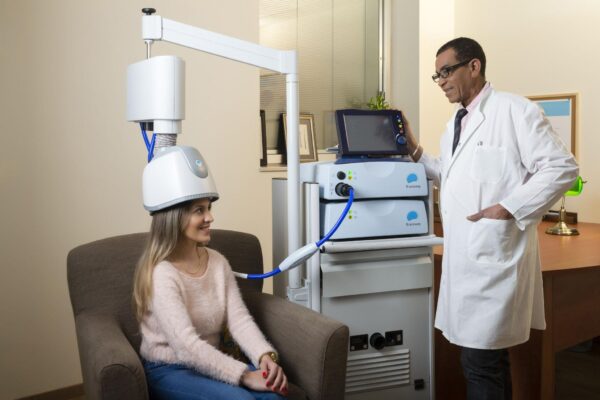
Image courtesy of BrainsWay
Some insurance plans do extend coverage to anxious depression, where anxiety symptoms occur alongside a depression diagnosis, but that is different from PTSD or a standalone anxiety disorder, which are generally not part of standard TMS insurance benefits.
This distinction matters for cost specifically: insurance providers are far more likely to approve, and reduce your out-of-pocket cost for, treatment tied to one of the three cleared conditions above than for other mental health conditions TMS is still being researched for. It’s also why Oasis’ clinicians want confirmation that TMS is the right, evidence-backed way to treat patients before submitting anything to your insurer.
What Determines Whether Your Plan Will Approve It
Insurance companies do not approve TMS automatically. Most require two things before they will cover it: a confirmed diagnosis of moderate-to-severe major depressive disorder or treatment-resistant depression, typically documented using standardized scales like the PHQ-9, HAM-D, or MADRS, and documented failure of at least two antidepressant medications from different drug classes, tried at a therapeutic dose for roughly six to eight weeks each.
Some plans also require documentation of at least one failed attempt at talk therapy with a licensed provider. Oasis requests those records directly from your previous healthcare providers, with your consent, as part of putting together your case.
Important: A couple of things can complicate approval regardless of your diagnosis: a history of seizures or certain metal implants near the head are contraindications that can affect eligibility for TMS altogether, separate from the insurance question entirely.
Not All TMS Protocols Are Covered the Same Way
TMS is not a single, one-size-fits-all brain stimulation therapy; it comes in a few different protocols, and how much of it your insurance actually pays for can vary by which one you need.
Here is how the main options compare.
Repetitive TMS (rTMS)
Standard repetitive transcranial magnetic stimulation, often just called repetitive TMS or rTMS, is the original, most established form of the treatment, typically delivered on a treatment schedule of five sessions a week for four to six weeks.
It is the form of TMS therapy covered most consistently by commercial insurance, Medicare, Medicaid (in many states), and Tricare.
Deep TMS
Deep TMS, which is what Oasis primarily uses for major depressive disorder and treatment-resistant depression, uses a different coil design that reaches deeper brain regions, and is covered on largely the same basis as standard rTMS. Like rTMS, it is a non-invasive treatment, meaning there is no surgery, incisions, or anesthesia involved.
For many patients, that noninvasive treatment approach is a real factor in choosing TMS over more invasive options in the first place, regardless of what insurance ultimately covers.
Theta Burst and Accelerated Protocols
Theta burst stimulation and other accelerated protocols are shorter, often just three to ten minutes per session, and are FDA-cleared for depression. However, most insurance companies do not currently cover these accelerated protocols, with some still classifying them as investigational.
A few insurers will allow them under the general TMS benefit code once prior authorization is obtained. If you are considering a protocol that is not fully covered by your plan, Oasis will walk you through financing and payment plan options before anything is scheduled, so you are not caught off guard partway through.
Specialized Protocols Like SAINT
Newer, highly specialized protocols outside of what Oasis offers, like SAINT (Stanford Accelerated Intelligent Neuromodulation Therapy), can run considerably higher, sometimes exceeding $30,000 for a complete protocol, which is worth knowing if you have seen that option mentioned elsewhere.
How TMS Cost Compares to Other Depression Treatments
Cost only means something in context. Here is how TMS stacks up against other options patients often consider for treatment-resistant depression:
Treatment | Typical Cost Without Insurance | Typical Cost With Insurance |
TMS (36-session course) | ~$7,200 | $360–$1,800 |
SPRAVATO® (esketamine), per treatment | $500–$900 per dose | As little as $10 per treatment for eligible commercially insured patients |
Electroconvulsive therapy (ECT), per course | Often $15,000–$25,000+ depending on setting | Varies significantly, ECT is typically billed as a hospital procedure |
Ongoing antidepressant medication | Varies by drug, often $10–$200+ per month over years | Often a standard prescription copay per month |
TMS and SPRAVATO® are both start with a defined, time-limited course rather than a daily medication taken indefinitely. Some patients continue with occasional maintenance sessions afterward, but far less frequently than a daily prescription, which is part of why many patients weigh them against the cumulative cost, and side effects, of years of medication trial and error.
TMS also tends to carry a lighter side-effect profile than ECT: most patients experience only mild scalp discomfort at the treatment site, rather than the anesthesia and recovery time that come with an ECT procedure.
How Oasis Handles the Insurance Side For You
A big part of what makes TMS cost predictable, instead of a surprise, is the work that happens before you ever start treatment. Here is what that looks like at Oasis:
Step 1: Consultation call.
In about 15 minutes, our team learns where you are in your depression treatment and gives you a preliminary sense of whether TMS is likely to be covered by your plan.
Step 2: In-depth consultation and insurance verification.
We review your medical history and treatment journey, then our TMS coordinators contact your insurance provider directly to verify your insurance benefits, including your in-network status, deductible, copayments, and whether prior authorization is required. You receive a written estimate of your final cost before anything moves forward.

Image courtesy of BrainsWay
Step 3: Clinical evaluation and medical necessity submission.
A formal psychiatric evaluation confirms TMS is the right fit. If it is not, our team may recommend other treatment options like SPRAVATO® instead, another FDA-approved option for treatment-resistant depression. If TMS is appropriate, we submit your diagnosis, symptom severity scores, medication history, and therapy records to your insurer, and track the authorization until it is resolved.
Step 4: Approval and treatment.
Authorization typically takes anywhere from a few business days to two weeks, depending on whether anything is missing or unclear, or if your insurer has follow-up questions. Our team checks in regularly on where things stand, makes sure your documentation is complete from the start, and responds quickly to any insurer requests, so the process doesn’t stall waiting on us.
Once authorization comes through, treatment begins. If your plan doesn’t require prior authorization, your mapping session and first treatment are scheduled right away. Our team monitors your progress throughout your course of treatment and handles billing and claims directly with your insurer, so you’re not the one chasing down paperwork.
Paying for TMS: HSA, FSA, and Financing
Even with insurance covering part of the cost, there can still be a balance left over. Here are the tools most patients use to manage it:
- Payment plans. If your plan does not cover TMS, or only covers part of it, our team can discuss financing and payment plan options as part of your initial consultation, so you are not left figuring out the full cost on your own before starting TMS therapy.
- HSAs and FSAs. TMS is generally considered a qualified medical expense under IRS guidelines when prescribed by a physician for a diagnosed condition. That means HSA and FSA funds can typically be used for sessions, copays, deductibles, and your initial consultation, all with pre-tax dollars.
- Sliding scale or hardship support. Some clinics offer financial assistance for patients who qualify. It is worth asking directly what is available rather than assuming there is nothing to work with.
- Employer benefits. Depending on your workplace, short-term disability or employer wellness benefits may help offset part of the cost. Checking with your HR department is worth the five minutes it takes.
Do not be afraid to ask direct, practical questions about financing at your initial consultation. The financial side of starting TMS therapy matters just as much as the clinical side, and we would rather talk it through upfront than let cost catch you off guard later.
Additional TMS-Related Costs You Should Plan For
TMS is an outpatient, non invasive treatment, which means you don’t need a hospital stay or a recovery room. But there are still some costs worth anticipating beyond the standard treatment sessions themselves.
- Clinical extras: An initial psychiatric evaluation, brain mapping and motor threshold appointment, periodic reassessments, and follow-up mental health services.
- Consultation fees: Some clinics charge separately for initial consultations or may bundle them into the treatment package. However, when you come to Oasis, the initial consultation is completely free of charge.
- Life logistics: Transportation to near-daily sessions, potential unpaid time off work, childcare, and parking – these indirect costs add up.
- Ongoing care: Many patients continue medications or psychotherapy during TMS, so those behavioral health costs remain part of the picture.
Unlike electroconvulsive therapy, TMS doesn’t require someone to drive you home afterward, and you can return to normal activities immediately. Most patients experience only mild scalp discomfort during sessions, which keeps associated medical costs minimal.
Is TMS Worth the Cost?
That is ultimately a personal question, but treatment is worth weighing against more than the sticker price.
TMS has shown strong outcomes for people whose depression symptoms have not improved with medication alone: published data on the Deep TMS technology shows response rates as high as 82%, with a 65% remission rate. For many patients, that is measured against years of trying medications that came with side effects and only partial relief, which has its own cost, financial and otherwise.
A quick conversation with our team is the fastest way to find out what your specific plan would actually mean for your out-of-pocket cost, rather than relying on a general number from an article, including this one.
Frequently Asked Questions
What happens during my initial consultation?
Your first consultation covers a few key things: a review of your mental health history and any depression treatment you’ve tried before, a check for other FDA-cleared indications like OCD if relevant to you, a safety screening for TMS (including checking for incompatible metal implants near the head), and an insurance verification and benefits check. By the end, you’ll have a preliminary outline of what your plan is likely to cover and what steps, like prior authorization, come next. Most approvals are resolved within a few business days to two weeks.
Does insurance always cover TMS?
Not automatically. Most insurers require a confirmed diagnosis of moderate-to-severe major depressive disorder or treatment-resistant depression, along with documented failure of at least two antidepressants from different drug classes, before approving coverage.
What happens if my insurance changes in the middle of TMS treatment?
If your insurance changes partway through treatment, our team runs a fresh benefits check and, if needed, submits a new prior authorization with your new insurer. The best thing you can do is let us know as soon as you expect a change, whether that’s a new job, open enrollment, or anything else, so we have time to prevent a gap in your coverage and keep you from getting a surprise bill.
How many sessions will I need, and does that affect cost?
A standard course of TMS is 36 sessions over about six weeks, which is the basis for the cost estimates in this guide. Your actual number depends on how you respond to treatment, some patients need fewer sessions, others continue with more. Either way, more sessions mean a higher total cost, whether that’s added self-pay cost per session or a higher total copay with insurance.