







If you’ve tried antidepressants and therapy without enough relief, there’s a good chance transcranial magnetic stimulation, or TMS, has come up in your research. It can sound like an unusual idea at first: using magnetic pulses, similar technology to what’s behind an MRI machine, to ease depression without medication or surgery.
But unusual doesn’t mean unproven. It’s a legitimate, FDA-cleared treatment, and understanding how it actually works tends to make the decision feel a lot less uncertain.
Key Takeaways
- TMS (transcranial magnetic stimulation) is a noninvasive brain stimulation treatment, FDA-cleared for major depression, that uses magnetic pulses instead of medication.
- It’s generally considered once standard antidepressants and therapy haven’t provided enough relief.
- At Oasis, we use BrainsWay Deep TMS, which reaches deeper and broader areas of the brain than standard TMS devices, with real-world data showing an 82% response rate and a 65% remission rate.
- A typical course runs 5 sessions a week for 4 to 6 weeks, about 36 sessions total, with each Deep TMS session at Oasis lasting around 20 minutes, no anesthesia and no downtime.
- TMS does not cause memory loss, sedation, or dependence, and it’s covered by most major New Jersey insurance plans when prior authorization criteria are met.
What Transcranial Magnetic Stimulation Actually Is
Transcranial magnetic stimulation TMS is a noninvasive treatment for depression, so you don’t have to worry about surgery, incisions, or anything entering your body. Instead, it uses targeted magnetic pulses to stimulate nerve cells in the areas of the brain involved in mood regulation.
TMS has been used clinically since 2008, when the FDA first cleared it for treating major depressive disorder in adults who hadn’t found enough relief from standard antidepressants. Since then, the technology has continued to evolve, and a few different versions of TMS are now used depending on the coil design and treatment goals.
- Standard rTMS: uses a figure-8 coil, two circular coils placed side by side, positioned against one specific spot on the scalp. Pulses are delivered in a steady, repetitive rhythm over a session lasting around 20 to 40 minutes. It’s the original, most widely studied version of TMS, and what most insurance plans are built around covering.
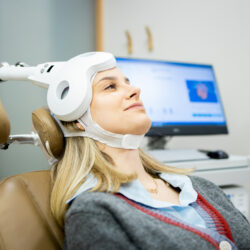
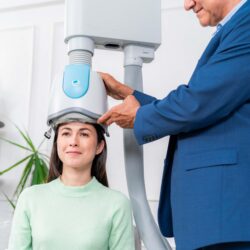
- Deep TMS: uses a cushioned, helmet-style coil that wraps more broadly around the head, reaching deeper and covering a wider area of the brain than the figure-8 design. Pulses are still delivered in a steady rhythm, and sessions run a similar length to standard rTMS.
- Theta burst stimulation: delivers pulses in rapid, clustered bursts rather than a steady rhythm, cutting session time down to about 3 to 10 minutes. It’s FDA-cleared for depression, but most insurance plans don’t yet cover it consistently, and some classify it as investigational, so it isn’t a standard offering here.
- Accelerated protocols (such as Stanford’s SAINT method): compress an entire treatment course into just a few days by delivering multiple sessions in a single day, rather than spreading them across 4 to 6 weeks. SAINT itself received FDA clearance in 2022, but these accelerated protocols are highly specialized, not something we offer at Oasis, and tend to run significantly higher in cost, sometimes exceeding $30,000 for a full protocol.
At Oasis, we use BrainsWay Deep TMS specifically, delivered on the standard schedule described below. Since standard rTMS and Deep TMS are the most established and best-covered by insurance, they remain the most practical choice for most patients, even as newer accelerated protocols continue to be studied.
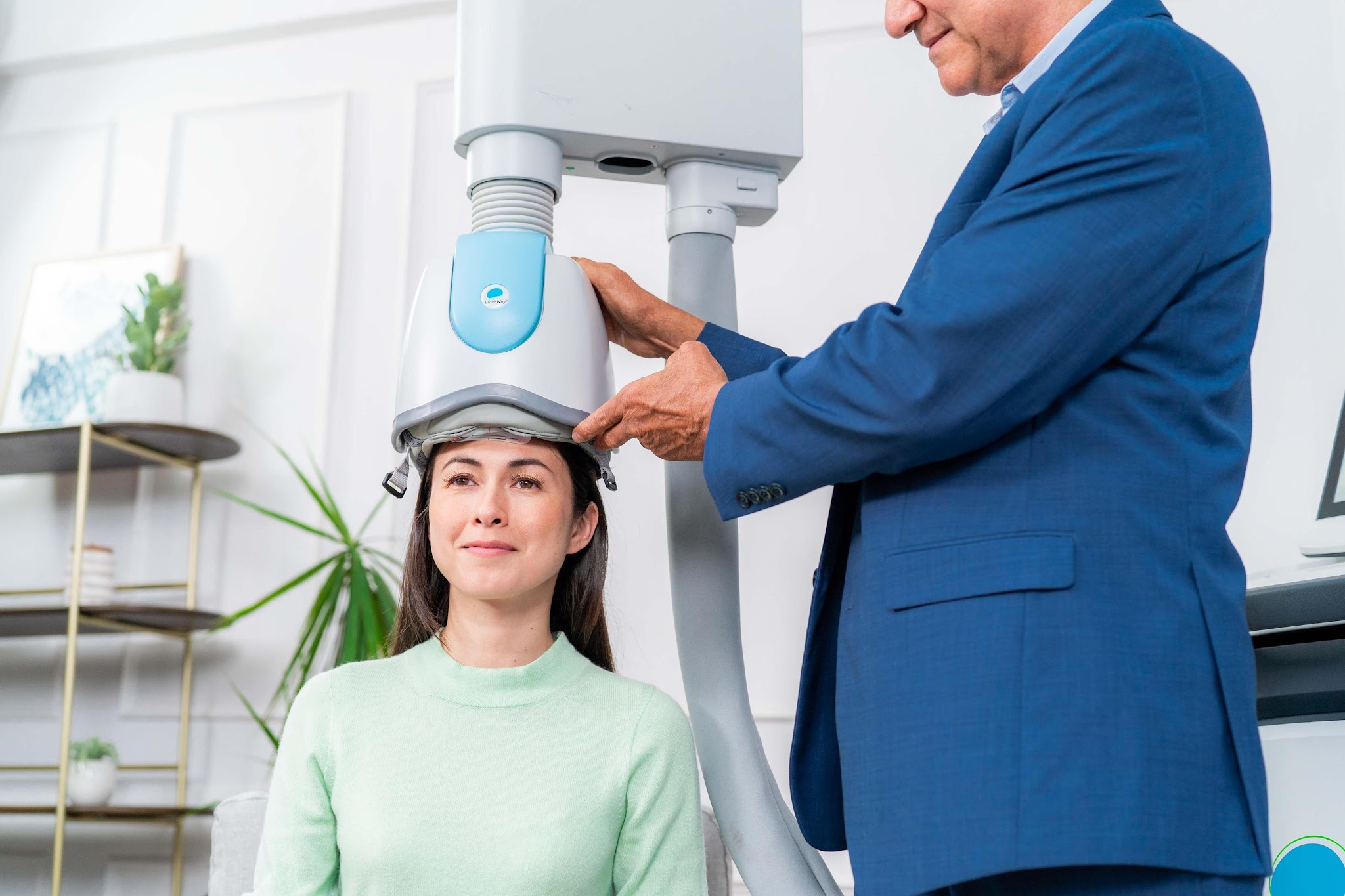
Image courtesy of BrainsWay
How TMS Works in the Brain
TMS uses electromagnetic induction, the same basic principle behind an MRI machine, to reach the brain without surgery. The magnetic coil generates a brief magnetic field that passes through the skull and creates a weak electrical current in the brain tissue beneath it, enough to activate nerve cells in targeted circuits, not enough to damage tissue.
For major depressive disorder, that targeting matters. Transcranial magnetic stimulation is aimed at the dorsolateral prefrontal cortex, a region near the front of the brain involved in mood regulation that tends to be underactive in depression. Think of it like a dimmer switch that’s been turned down too low: TMS doesn’t force a change, it stimulates the circuit enough to help the brain gradually turn itself back up.
The pulses themselves are delivered repeatedly, in a steady rhythm, over a full course of sessions, which is why this approach is called repetitive TMS, or rTMS. Rather than a single pulse, rTMS applies a train of magnetic pulses to the brain in rhythmic patterns. That’s distinct from single-pulse TMS, used mainly in research and diagnostic testing, for example to measure how responsive the brain’s motor control regions are, rather than as a treatment.
Both standard TMS and Deep Transcranial Magnetic Stimulation deliver this same repetitive stimulation; they differ in coil design and reach, not in this underlying mechanism, which is why they produce the same kind of therapeutic effect. That effect builds gradually: over a full course of sessions, the stimulation promotes lasting changes in how strongly connected brain cells communicate with each other, a process closely related to neuroplasticity, the brain’s natural ability to rewire and adapt.
Conditions TMS Can Help: Beyond Depression
While TMS is most widely known as a way to treat depression, but, its uses have grown well beyond depression over the last decade — including these FDA cleared indications in the U.S.:
- Treatment resistant major depressive disorder (the original and most established use)
- Obsessive compulsive disorder, as an adjunct to medication and therapy, using specific deep TMS systems cleared by the FDA in 2018
- Smoking cessation in adults, using deep TMS with an H4 coil, cleared in 2021
Common applications of TMS include major depressive disorder and obsessive compulsive disorder, but the list does not end there. TMS can also help manage chronic pain and migraines, and it is being studied for stroke rehabilitation and Parkinson’s disease. Research also shows promise for treating post traumatic stress disorder and substance use disorders beyond nicotine. TMS can influence brain circuits involved in craving and behavioral control for smoking cessation, which is part of why deep TMS protocols for addiction target specific regions like the insula.
Repetitive transcranial magnetic stimulation is also being investigated in clinical trials for bipolar disorder (specifically depressive episodes), generalized anxiety, and other neurological and psychiatric disorders. These uses are still considered off-label, meaning the evidence is growing but not yet sufficient for formal FDA clearance.
Who Is a Good Candidate for TMS
TMS tends to be a good option for people who’ve tried standard antidepressants and therapy without enough relief, and who want a treatment that doesn’t involve medication side effects or an extended recovery period. It’s also worth considering if you’ve had a hard time tolerating antidepressant side effects like weight gain, sexual side effects, or sleep disruption, since TMS doesn’t carry those same risks.
TMS isn’t right for everyone, though. Before moving forward, we’ll check a few safety basics like:
- Metal implants or electronic devices near the head or neck: this includes aneurysm clips or coils, cochlear implants, implanted stimulators, cardiac pacemakers or defibrillators, stents, and other metallic implants close to the treatment area. The strong magnetic field TMS uses can potentially move or interfere with these devices. Metal elsewhere in the body, like hip replacements or dental fillings, generally isn’t a concern.
- A history of seizures or epilepsy: TMS carries a very small seizure risk, and that risk is higher for people who already have a seizure disorder or take medications that lower the seizure threshold. This doesn’t automatically rule someone out, but it’s a factor our team weighs carefully.
- Pregnancy: this isn’t a strict exclusion, but it’s discussed carefully with your care team given the more limited research specifically in pregnant patients.
- Bipolar disorder: TMS can, in rare cases, trigger a manic episode in people with bipolar disorder specifically, so this history is reviewed closely.
If any of these apply to you, that doesn’t automatically rule out treatment, but it’s something we’ll talk through directly during your evaluation, which includes a physical and mental health assessment before any sessions begin.
What to Expect at Your First TMS Evaluation
Your first visit at Oasis is not a treatment session. It is a conversation. We typically schedule 60 to 90 minutes so there’s no need to rush, and so our treatment team can truly listen to your story.
Image courtesy of BrainsWay
During this consultation, we cover:
- Diagnosis review: Confirming whether you are dealing with major depressive disorder, obsessive compulsive disorder, or another condition that TMS may address, and screening for conditions like bipolar disorder or psychosis that require different approaches.
- Treatment history: Which antidepressant medications you have tried, at what doses, for how long, and what happened. We also ask about therapy, hospitalization, and any other depression treatments or brain stimulation therapies you have explored.
- Safety screening: We use a standardized questionnaire to assess seizure risk factors, the presence of metal in or near the head (such as certain aneurysm clips or metal fragments), implanted electronic devices, substance use, pregnancy status, neurological disorders, and history of traumatic brain injury.
- Logistics and insurance: We discuss insurance coverage and prior authorization requirements for TMS treatment, set realistic expectations about timing and possible benefits, and talk through what consistent attendance looks like.
This is also your chance to ask every question on your mind. You’re free to choose whether or not to proceed, and taking time to decide is fully respected.
What Happens During a TMS Session?
Here’s what a typical session actually feels like:
- Arrival: You check in, remove any magnetic-sensitive items like credit cards or watches, and settle into a comfortable treatment chair. No gown, no IV, no anesthesia.
- Mapping: During your first session, the technician places the TMS coil over the primary motor cortex, a region on the side of your head that controls hand movement. TMS can induce muscle twitches when applied over the motor cortex, so the technician gradually increases the magnetic stimulation until your thumb or hand twitches slightly. This determines your motor threshold, which is the minimum energy level needed to activate your brain cells, and it is used to personalize your dosage safely.
- Treatment delivery: The coil is then repositioned to the treatment target, usually the left dorsolateral prefrontal cortex for depression. You’re given earplugs or ear protection because of the clicking sound the device makes. The TMS coil delivers pulses in short trains with rest periods in between. You will feel a tapping or knocking sensation on your scalp and hear rapid clicking from the device.
- During the session: You can read, listen to music, or simply rest. A trained technician stays nearby, checks in regularly, and can pause or stop the session at any time if you feel uncomfortable.
A typical TMS session may last anywhere from about 3 minutes for iTBS protocols to around 40 minutes for standard rTMS, depending on the protocol and TMS device used. A Deep TMS session at Oasis lasts around 20 minutes.
How Long Does a Full Course of TMS Take?
A typical course of TMS involves daily sessions over several weeks. Most FDA-cleared depression protocols call for about 20 to 36 treatment sessions, scheduled five days a week, often spanning four to six weeks. Some protocols include a gradual taper of sessions toward the end of the treatment plan.
OCD and smoking cessation protocols may follow different exact schedules. For smoking cessation with deep TMS, pivotal studies used around 18 sessions over several weeks. Our clinicians at Oasis tailor the schedule to your work, school, and caregiving responsibilities whenever possible.
Consistency matters. Missing frequent sessions can reduce the chances of improvement, so we work with you in advance to identify potential barriers like transportation, childcare, or shift schedules. Many of our patients find that morning sessions before work or lunchtime visits fit well into their routines without requiring major disruptions to daily life.
What Does TMS Feel Like? Comfort, Noise, and Sensations
Most people describe the sensation as a tapping or knocking feeling on the scalp directly under the coil, accompanied by rapid clicking sounds from the TMS device. It feels unusual the first time, but the majority of people find it tolerable and increasingly easy to ignore as sessions continue.
During the first few sessions, you may notice mild scalp discomfort, facial muscles twitching slightly, or a temporary headache. These are the most common early experiences, and our team can adjust coil position, stimulation intensity, or pacing to improve comfort. Simple strategies like over-the-counter pain relievers before a session or extra short breaks can also help.
You remain fully awake throughout and can talk to staff, pause, or stop the session at any time. There’s usually no recovery time afterward. Most people drive themselves home, go to work, or care for family immediately after their TMS session ends.
Is TMS Safe? Side Effects and Risks
TMS has a strong safety record and is generally well tolerated. Unlike standard antidepressants, it doesn’t cause systemic side effects like weight gain, sexual dysfunction, or gastrointestinal issues.
The most common side effects are mild and tend to ease within hours, often fading entirely after the first few sessions:
- Headaches
- Scalp tenderness
- Temporary lightheadedness or fatigue
- Brief facial or eyelid twitching during the pulses
Serious side effects are rare, and our team screens for the eligibility factors covered above, metal implants, seizure history, pregnancy, and bipolar disorder, before starting treatment specifically to guard against them:
- Seizures occur in fewer than 0.1% of patients.
- In rare cases, TMS can trigger a manic episode in patients with underlying bipolar disorder.
- Hearing loss is possible if the ears aren’t properly protected during treatment, which is exactly why earplugs are provided at every session.
One thing worth being clear about: TMS doesn’t cause memory loss or cognitive impairment. That’s a common misconception that comes from confusing TMS with electroconvulsive therapy (ECT), a different treatment entirely. Many patients report clearer thinking as their depression improves, not the reverse.
TMS vs Electroconvulsive Therapy (ECT)
TMS and electroconvulsive therapy (ECT) are both used for depression that hasn’t responded to standard treatment, but they work very differently.
TMS | ECT | |
How it works | Magnetic pulses | Electrical currents that induce a seizure |
Anesthesia required | No | Yes |
Memory loss risk | Does not cause memory loss | About 60% of patients report memory problems afterward |
Getting home after | Drive yourself | Someone else must drive you |
Typical setting | Outpatient clinic | Usually hospital-based |
Because TMS doesn’t involve anesthesia or memory-related side effects, it’s often a more accessible starting point for people who qualify for either treatment. ECT tends to be reserved for the most severe or urgent cases.
TMS Cost and Insurance Coverage at Oasis
Without insurance, TMS at Oasis costs $200 per session, or roughly $7,200 for a full 36-session course, plus a separate initial evaluation of $250 to $400 (the initial consultation itself is free). With insurance, copays typically run $10 to $50 per session, or $360 to $1,800 for a full course. TMS is generally a qualified medical expense under IRS guidelines, so HSA or FSA funds can usually be used to cover sessions, copays, and the initial evaluation.
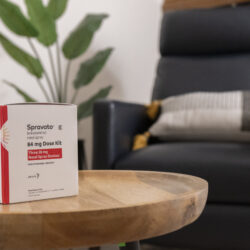
For context, a full course of ECT without insurance often runs $15,000 to $25,000 or more, since it’s typically billed as a hospital procedure, and ongoing antidepressant medication can cost anywhere from $10 to $200 or more per month, indefinitely. TMS, like Spravato®, starts with a defined, time-limited course rather than an open-ended prescription, which is worth factoring into any cost comparison.
Most major New Jersey insurance plans cover TMS when prior authorization criteria are met, generally a confirmed MDD or treatment-resistant depression diagnosis and documented failed antidepressant trials from at least two different drug classes.
Our team handles insurance verification and the entire prior authorization process on your behalf, provides a written cost estimate before treatment begins, and follows up regularly with your insurer so the process doesn’t stall waiting on our end.
Ready to Find Out if TMS Is Right for You
Choosing your next step after trying medication and therapy isn’t easy. TMS, a noninvasive brain stimulation treatment, won’t be the right fit for everyone, and that’s exactly why the process starts with a conversation, not a commitment.
If you’re ready to find out whether TMS could be part of your treatment plan, reach out to our team and start a conversation.
Frequently Asked Questions
Will I feel like a different person after TMS, or will it change my personality?
TMS is not designed to change your core personality. It targets the brain circuits responsible for depression symptoms, anxiety, or obsessive thoughts, with the goal of helping those systems function more normally. Most people describe feeling “more like themselves” rather than different, with better energy, clearer focus, and a wider emotional range once the heaviest symptoms lift.
What happens if my symptoms come back after I finish TMS?
While many people experience lasting improvement, some do have a partial or full return of symptoms months or even years later, just as can happen with medications or therapy. Repeat courses of TMS or maintenance sessions are options that have helped some patients, and most insurers will consider coverage for additional rounds when there was clear benefit the first time. At Oasis, we create a long-term plan that may include ongoing therapy, lifestyle supports, and scheduled follow-up visits so that if symptoms reappear, we can respond early rather than waiting for a full relapse.
Is TMS addictive or something I can get dependent on?
No. TMS does not work like substances or certain medications that can cause physical dependence. It does not produce a high or withdrawal symptoms when stopped. The brain changes from repetitive transcranial magnetic stimulation are more like gradual adaptations in neural circuits, similar to physical therapy for the brain. If additional TMS is needed in the future, it is because symptoms have returned, not because the brain is dependent on the treatment.