


If a friend or doctor just brought up Spravato® and you’re trying to figure out what that actually means, you’re in the right place. It’s not a pill, it’s not talk therapy, and it doesn’t work the way anything you’ve tried before does.
Spravato® (an FDA-approved nasal spray medication) is a newer kind of depression treatment that has shown relief where other approaches have fallen short.
Here’s the honest, plain-language rundown, so you can decide for yourself.
Key Takeaways
- Spravato® is a fast-acting option for adults whose treatment resistant depression has not improved with at least two oral antidepressant medications. It was first approved by the FDA on March 5, 2019, and it can provide symptom relief within hours or days rather than the weeks that traditional pills often require.
- Spravato® is given only in certified clinics, like ours at Oasis, as a nasal spray in conjunction with an oral antidepressant. It is never dispensed for home use. Patients must enroll in a restricted program called the Spravato® REMS before their first dose, which our team guides you through, so there’s nothing to handle on your own.
- Many patients in clinical trials felt some relief in depressive symptoms within hours to days, but results and timelines vary from person to person. Not everyone responds at the same speed, and some people need several sessions before noticing meaningful changes.
- Safety basics matter: every treatment session includes required direct observation for about two hours after dosing, and patients cannot drive or operate machinery until the next day after restful sleep. Our team carefully monitors blood pressure, mental status, and any drug interactions at every visit.
Understanding Treatment‑Resistant Depression (TRD)
Let’s start with what treatment resistant depression actually means, because the name can feel heavy on its own.
Treatment resistant depression is a major depressive disorder (MDD) that has not improved enough after trying at least two different oral antidepressant medications at the right dose for the right length of time. It’s not a reflection of willpower, character, or effort. It’s a medical reality that affects an estimated 15 to 33 percent of people with major depressive disorder, according to research published in American Family Physician.
Depressive symptoms can show up in many ways: a depressed mood that doesn’t lift, loss of interest in things you used to enjoy, changes in sleep or appetite, crushing fatigue, guilt that seems out of proportion, difficulty with cognitive functioning, and sometimes suicidal thoughts or suicidal ideation. When these symptoms persist despite treatment, it’s understandable to feel discouraged-or even frightened.
Standard antidepressant drugs like SSRIs (Selective Serotonin Reuptake Inhibitors) and SNRIs (Serotonin and Norepinephrine Reuptake Inhibitors) work primarily on serotonin and related brain chemicals. They can take four to six weeks, sometimes longer, to produce a noticeable change, and for some people, that change never fully arrives. Living through weeks of waiting, adjusting doses, switching medications, while still feeling the full weight of major depression, is exhausting.
That slow response is exactly why newer depression treatments like Spravato® were developed to work differently.
What Is Spravato®?
Spravato® is the brand name for esketamine nasal spray, developed by Janssen Pharmaceuticals. It is FDA-approved for two groups of adults:
- Adults with treatment resistant depression who have had an inadequate response to at least two oral antidepressant medications.
- Adults with major depressive disorder who have depressive symptoms with acute suicidal ideation or behavior, when used in conjunction with an oral antidepressant.
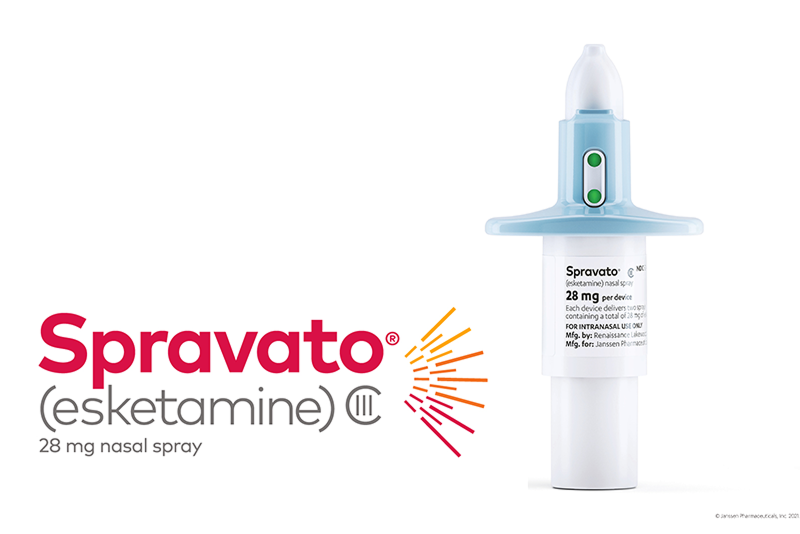
Image courtesy of Johnson & Johnson / Spravato® Treatment Center Communications Toolkit © Johnson & Johnson and its affiliates 2025
Esketamine is a specific form of ketamine that targets the brain’s glutamate system, which is fundamentally different from how typical oral medications work. The physical medication itself is a single-use nasal spray device that delivers 28 mg of esketamine through two sprays-one in each nostril. A typical Spravato® session could involve two or three of these devices depending on the prescribed dose.
Spravato® is available only through a restricted program under the FDA’s Risk Evaluation and Mitigation Strategies (REMS). Patients cannot pick it up at a pharmacy or use it at home. Every dose is administered in a certified healthcare setting, like the treatment rooms at Oasis, under the direct observation of trained staff.
Note: As of January 2025, Spravato® can also be used as a monotherapy for treatment resistant depression-meaning it can be used alone or with an oral antidepressant, depending on the clinical situation. Before that update, it was required to be paired with an oral antidepressant medication in all cases.
How Spravato® Works in the Brain (In Simple Terms)
Most antidepressants target serotonin, norepinephrine, or dopamine. Spravato® works differently: it targets glutamate, the brain’s most common chemical messenger.
Here’s the leading theory behind what happens in the brain:
- Esketamine temporarily blocks a receptor called NMDA (short for N-methyl-D-aspartate, just the name of a specific docking site on brain cells).
- Blocking that receptor triggers a brief surge of glutamate, which boosts activity and communication between brain cells.
- That surge activates a different receptor called AMPA, which is believed to trigger the release of BDNF (brain-derived neurotrophic factor), a protein that helps brain cells grow and form new connections.
- Those new connections feed into neuroplasticity, your brain’s ability to reorganize itself and build new pathways.
Put simply, Spravato® helps “stuck” brain pathways reset and reconnect, which is thought to be why it can treat depressive symptoms faster than with traditional antidepressants.
You don’t need to memorize any of this for the treatment to work. We share it because many patients feel more comfortable trying something new once they understand the thinking behind it.
Who Spravato® Is For (And Who It’s Not For)
Spravato® isn’t a good fit for every person living with major depressive disorder. Here’s a general sense of who tends to be a good candidate, and who typically needs a different approach.
You may be a good candidate if you’re an adult who has:
- Tried at least two different classes of oral antidepressants without adequate relief (the clinical definition of treatment-resistant depression)
- A diagnosis of major depressive disorder along with acute suicidal thoughts or behavior, where an oral antidepressant alone hasn’t been fast enough
Spravato® is not approved for children or young adults under 18, and it may not be the right option if you have:
- Uncontrolled high blood pressure
- Aneurysmal vascular disease, including conditions affecting the abdominal aorta or brain
- History of intracerebral hemorrhage or arteriovenous malformation (an abnormal connection between arteries and veins in the brain)
- Certain heart or blood vessel conditions that could be worsened by sudden severe headache or chest pain from blood pressure changes
- Severe hepatic impairment (serious liver disease)
- History of psychotic disorders or active drug abuse
None of these automatically rule someone out on their own. They’re exactly why we start with a full medical and psychiatric history, a complete medication review, and an honest conversation about your risk factors before recommending Spravato® treatment. If you’re unsure if you have a history of any of these disorders, let our team know. They can help research your medical history to make sure this can be as safe and effective as it can be.
What to Expect at a Spravato® Treatment Session
Walking into a treatment session for the first time can feel nerve-wracking, so here’s what the process actually looks like at Oasis, step by step.
Before dosing: You check in, and our team reviews your vital signs, especially blood pressure, along with a brief mood check-in and safety questions. We confirm any new medications, supplements, or changes in your health to watch for potential drug interactions.
During dosing: You self-administer the esketamine nasal spray in a comfortable, private room. Each nasal spray device delivers 28 mg of medication, and depending on your dose (56 mg or 84 mg), you’ll use two or three devices with short rest periods in between. A member of our nursing and psychiatric team stays with you the entire time.
After dosing: You rest in a recliner while we monitor your blood pressure, heart rate, mental status, and any side effects. Patients are monitored for at least two hours post-dose before they can leave. The typical induction treatment schedule is twice weekly for the first four weeks, then weekly for several weeks, and eventually every one to two weeks for maintenance-always adjusted to how you’re responding.
Phase | Frequency | Duration |
Induction | Twice weekly | Weeks 1–4 |
Optimization | Once weekly | Several weeks |
Maintenance | Every 1–2 weeks | Ongoing, as needed |
Since each visit requires a two-hour observation period, you should plan for about two and a half to three hours total including check-in and dosing. During the first month especially, this may mean adjusting work schedules or arranging time off.
You will need a trusted adult to drive you home after every session. You cannot drive, operate machinery, or do hard physical labor until the next day after a full night of restful sleep. These rules exist for your safety and are non-negotiable.
What It Feels Like During and After Spravato®
One of the most common questions we hear is: “What will it actually feel like?”
Here’s what patients in clinical trials and in our own medical offices have described.
During the session, some people feel “spacey” or dissociated – a sense of floating, mild visual or sound distortions, or feeling temporarily detached from their thoughts or body. These experiences are typically mild for most people and not dangerous, though they can feel unfamiliar. Dissociative symptoms peak 30 to 40 minutes after the nasal spray administration and generally fade within one and a half to two hours.
After the session, some people feel tired or emotionally raw for the rest of the day. A quiet evening and gentle self-care like a warm meal, low-key activities, avoiding big decisions-tends to help. Others notice a lightening in their depressed mood fairly quickly, sometimes even the same day.
We encourage patients to share their experiences openly with our team after each treatment session. That feedback helps us fine-tune our treatment plans, dosage adjustments, and support strategies so we can make these visits feel as manageable as possible.
How Quickly Spravato® May Work (And What “Better” Can Look Like)
One of the most striking things about Spravato® is the timeline. In TRANSFORM-1, a major placebo-controlled study, many participants had measurable improvement in depressive symptoms within hours to days. A separate trial, SUSTAIN-1, found that patients who continued Spravato® had a 51% to 70% lower risk of relapse compared to those who switched to placebo.
But what does “better” actually feel like?
It rarely looks like flipping a switch.
Patients treated with Spravato® often describe early changes as subtle: less emotional heaviness, slightly more energy to get out of bed, small shifts in appetite, or the ability to engage with people again. Over weeks, these small shifts can deepen into significant improvement, returning the ability to feel connection, hope, and engagement with daily life.
Not everyone responds at the same pace. Some feel relief by the first dose. Others need several sessions. And for a minority, even a full treatment schedule may not produce the results they were hoping for.
At Oasis, our team tracks symptom changes over time using simple rating scales alongside real-life goals-like sleep quality, energy levels, and connection with others-to decide whether to continue, adjust, or change course. We believe in realistic hope rather than empty promises.
Side Effects, Risks, and Safety Monitoring
Every medication carries risks, and Spravato® is no exception. Being informed helps you feel more in control.
Common side effects include headache, dizziness, nausea, dissociation, sedation, feeling anxious, and short-term increased blood pressure. In clinical trials, dizziness occurred in about 29% of patients treated with esketamine nasal spray, and nausea was reported in about 28%. Transient increases in blood pressure were observed after dosing, which is why we check blood pressure before and repeatedly during every session.
Serious but less common risks:
- Significant blood pressure spikes (managed on-site with rest, positioning, or medication if needed)
- Heavy sedation or respiratory depression, especially when combined with other sedating medications
- Respiratory arrest (extremely rare)
- Severe dissociation requiring extended monitoring
- New or sudden changes in behavior or mood
Spravato® is classified as a schedule III controlled substance, meaning it carries risks of abuse and psychological dependence. However, the way it is given (only in clinic, under the REMS evaluation and mitigation strategy) is specifically designed to reduce this risk. We also screen for substance use history and support recovery when relevant.
We encourage you to tell our team about pregnancy (there is a national pregnancy registry tracking women exposed to Spravato®, since esketamine may cause fetal harm), plans to become pregnant, breastfeeding, heart or blood vessel conditions, history of stroke, ulcerative or interstitial cystitis, or a history of psychosis so we can weigh potential benefits and risks together.
Insurance Coverage, Costs, and Financial Support
Cost is one of the first things people ask about once they’re seriously considering treatment, and the honest answer is: it depends heavily on your coverage.
Without insurance:
- Per-dose cost: roughly $590 to $885, depending on strength
- First month of induction (twice-weekly sessions): typically $4,700 to over $7,000
- These figures depend heavily on your specific plan and provider contracts
With insurance:
- Most patients pay somewhere between $10 and $250 per session
- Many commercial plans, Medicare, and some Medicaid programs cover Spravato® for adults who meet criteria for treatment-resistant depression
- Medicaid coverage varies significantly by state, some states cover Spravato® with very low out-of-pocket costs, others restrict or exclude it, so it’s worth checking your specific state’s plan
What insurers typically require:
- Documentation of previous oral antidepressant trials
- Sometimes a specific diagnosis, like major depressive disorder with acute suicidal ideation
- Prior authorization, in most cases
At Oasis, our team helps you verify coverage before starting, estimate your actual out-of-pocket costs (copays, coinsurance, deductibles), and talk through what support may be available. Even with coverage, there can be additional costs tied to clinic visits and monitoring, so we encourage open conversations about finances early on, no surprises, no judgment.
And if the number you’re picturing still feels heavier than it should, there’s often more room to bring it down than people realize, we walk through exactly how in our full breakdown of Spravato® insurance coverage.
Taking the Next Step: Is Spravato® Right for You?
If you’ve made it this far, you already know more about Spravato® than most people do walking into their first appointment. Maybe you see yourself in the description of treatment-resistant depression. Maybe you’re just tired of waiting for something to work. Either way, you don’t have to figure out the rest of this alone.
We’re not here to sell you on Spravato® specifically, we’re here to listen to your story. Tell us what you’ve tried, what’s helped, what hasn’t, and what you’re dealing with right now. That conversation is what actually determines whether this is the right next step for you.
And we’ll be honest with you either way. If Spravato® isn’t the right fit, or if what you really need is talk therapy or a different kind of healthcare provider, we’ll tell you that too, and help point you toward it.
If you’re ready to talk it through, start a conversation with us. Bring your questions, bring your history, bring wherever you’re at right now. We’ll take it from there.
Frequently Asked Questions
Will I feel “high” or out of control on Spravato®?
Some people do feel altered during a session-spacey, detached, or as if time is moving differently. These sensations are related to the dissociative properties of esketamine and usually peak within about 40 minutes after the nasal spray and fade over the next one to two hours. This is exactly why sessions happen in a safe, calm room in a certified healthcare setting with staff nearby the entire time. You can signal at any moment if you feel uncomfortable, and we can offer grounding techniques or simply sit with you.
These effects are temporary, and most people are ready to leave after the standard observation period – though you must not drive until the next day.
Can I keep working while I’m on Spravato®?
Many patients do continue to work throughout treatment. The key is scheduling: each visit takes about two hours for monitoring plus travel time, and some people experience fatigue or mental fog that lasts into the evening. Planning sessions on days off, later in the afternoon, or on remote work days can help. During the intensive first month, when sessions happen twice weekly, some patients use medical leave or flexible scheduling arrangements.
An honest conversation with your employer about needing time for a medical appointment (you don’t have to share details) can make a real difference. A healthcare professional on our team can provide documentation if needed.
What if I’m afraid it won’t work after everything else I’ve tried?
That fear is incredibly common among people with treatment resistant depression, and it makes complete sense after multiple disappointments with other medications. We hear it often, and we never dismiss it. While no treatment is guaranteed, clinical trials and real-world experience show that a meaningful percentage of people who did not respond to traditional oral antidepressants do see improvement with esketamine nasal spray.
We encourage you to view Spravato® as one new chapter rather than a final verdict-and to know that an increased risk of discouragement doesn’t mean an increased risk of failure.
Can I stop my oral antidepressant once I start Spravato®?
It depends, and it’s a decision to make with your prescribing clinician, not on your own. As of January 2025, Spravato® is approved as a monotherapy for treatment-resistant depression, meaning it can be used without an oral antidepressant for some patients.
But if you’re currently taking the two together, stopping your oral antidepressant suddenly on your own can cause withdrawal symptoms or a return of depressive symptoms, a risk that’s easy to avoid with the right planning. Any shift toward Spravato® alone should be supervised by your prescriber, ideally in coordination with the Oasis team if we’re providing your Spravato® treatment.