



Starting a new depression treatment is already hard enough without the added worry of not knowing how it will make you feel. If you or someone you love is considering Spravato®, understanding the side effects ahead of time can turn uncertainty into something that feels more manageable – and that is exactly what this guide is here to do.
Key Takeaways
- Spravato® (esketamine nasal spray) can cause temporary side effects like dissociation, dizziness, nausea, fatigue, and increased blood pressure, but these typically resolve the same day.
- Serious adverse events are rare in monitored settings, though people with heart disease, uncontrolled high blood pressure, or bladder problems need extra screening.
- Many side effects can be reduced with a simple mitigation strategy: light meals, hydration, pre-dose anti-nausea medication, and open communication with your care team.
- Long-term data is reassuring, with stable cognitive function tracked for up to 3 years and no signs of organ damage or addiction risk out to 9 years.
- Most side effects resolve on their own, but it’s worth knowing when a quick call to your clinic, or in rare cases, emergency care, is the right move.
What Is Spravato® and Why Do Side Effects Happen?
If you have been living with treatment resistant depression-meaning other antidepressants have not given you adequate relief-Spravato® may be a name that keeps coming up. It is a prescription nasal spray approved by the FDA for adults with treatment resistant depression and for depressive symptoms tied to suicidal thoughts in major depressive disorder.
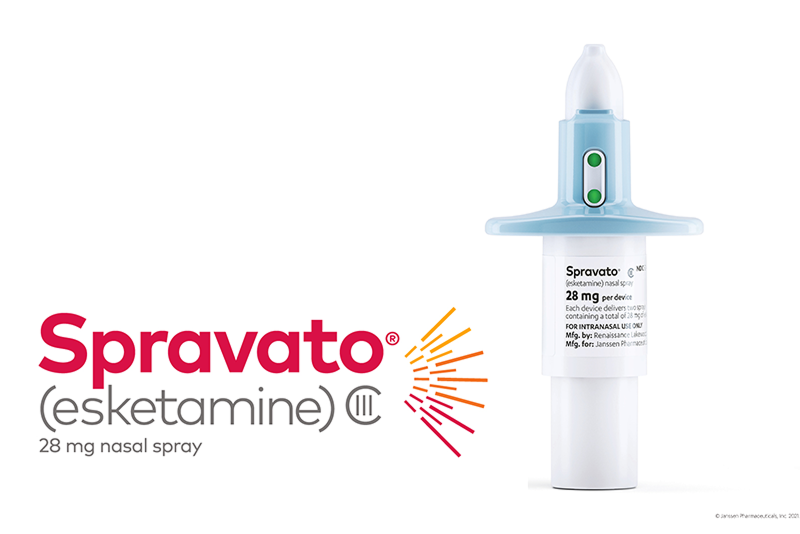
Image courtesy of Johnson & Johnson / Spravato® Treatment Center Communications Toolkit © Johnson & Johnson and its affiliates 2025
Spravato® is derived from ketamine, so it does come with side effects worth knowing about. That’s exactly why it’s only available through a Risk Evaluation and Mitigation Strategy (REMS) program, a safety framework that ensures every dose is given at a certified clinic like Oasis, with a trained care team monitoring you the entire time.
So why do side effects happen at all?
Spravato® works on the brain’s glutamate system by temporarily blocking what are called NMDA (N-methyl-D-aspartate) receptors. Think of it this way: your brain briefly shifts into a different gear, one that promotes new neural connections and can rapidly treat depressive symptoms. But, because that shift also touches parts of the nervous system that control perception, balance, and blood pressure, your body takes notice. You might feel floaty, dizzy, or a bit disconnected for a while.
Hence, Spravato® requires administration under the supervision of a healthcare professional in a certified clinic – never at home. Patients must remain at the clinic for at least two hours after taking Spravato® so staff can monitor how the body responds.
Remember, the side effects occur because the brain is temporarily adjusting, not because something has gone wrong, and trained staff are right there the entire time.
The Most Common Spravato® Side Effects (And How They Feel)
Most of what we know about Spravato® side effects comes from randomized, controlled clinical trials in adults with treatment-resistant depression, meaning depression that hadn’t improved with standard antidepressants alone. In those trials, side effects were typically mild to moderate, showed up shortly after the nasal spray was given, and eased by the end of the same day.
Here’s what patients experienced, and how common each one was:
- Dissociation – feeling “spacey,” dreamlike, or slightly detached from your body or surroundings. About 41% of patients experience dissociation with Spravato® treatment.
- Dizziness or vertigo – a room-spinning or unsteady sensation. Roughly 29% of patients report dizziness as a side effect.
- Nausea – sometimes with vomiting. Around 28% of patients experience nausea during Spravato® treatment.
- Sedation or sleepiness – a heavy, foggy feeling that makes you want to close your eyes.
- Headache – a common side effect that usually responds to rest and hydration.
- Fatigue – frequently reported after Spravato® administration, often lasting the rest of the day.
- Temporary increases in blood pressure and heart rate.
- Perceptual changes – distorted sense of time, blurred or double vision, or altered hearing.
These are expected adverse events, not necessarily signs of an allergic reaction or long-term damage. But every symptom still matters, so it’s important to share what you’re feeling openly with your care team during each visit.
Timeline: When Spravato® Side Effects Usually Occur During a Session
A Spravato® session follows a predictable rhythm, and knowing what happens at each stage can make the whole experience feel far less intimidating. Plan to be at the clinic for about two to three hours total, and arrange a ride home in advance, since driving yourself isn’t an option that day.
Here’s how a typical treatment day unfolds:
- 0–15 minutes: You may notice a mild taste or throat irritation.
- 15–45 minutes: This is when effects occur and usually peak. Dissociation, dizziness, and perception changes are most noticeable in this window – research shows peak effects around 30–45 minutes post-dose.
- 45–90 minutes: Symptoms gradually fade. Some people become sleepy or quiet as the brain settles.
- 90–120 minutes: Vitals are re-checked. Many people feel mostly normal but may still feel tired or mentally slowed.
- Rest of the day: Patients cannot drive or operate machinery for the rest of the day after taking Spravato®. Plan for restful sleep and a low-key evening.
Dissociation and other acute effects typically ease within that two-hour monitoring window, which is why the observation period is built into every visit. Many patients also find the experience becomes more familiar and less intense over repeated sessions, simply from knowing what to expect and when it will pass.
Managing Dissociation, Dizziness, and Nausea in the Clinic
Feeling “out of control” is one of the biggest fears people mention before their first dose, and that’s completely understandable. But dissociation is the most talked-about side effect for a reason: it’s common, it’s temporary, and it doesn’t mean you’re “going crazy.”
Here’s how care teams typically help patients stay grounded during dosing days:
- Coaching before the first dose, so you know exactly what dissociation feels like and that it will pass.
- Simple grounding techniques, like slow breathing or noticing your feet on the floor, can help if a session starts to feel disorienting.
- A calm, comfortable space for the two-hour monitoring period, since a quiet, low-stimulation environment tends to make dissociation easier to sit with.
For nausea and dizziness specifically:
- Follow the pre-dose eating guidelines: avoid food for at least two hours before your appointment and avoid liquids for at least 30 minutes before, per Spravato®’s FDA label. This alone reduces nausea risk for a lot of patients.
- Stay reclined during and right after each spray. You’ll be guided to keep your head reclined at about 45 degrees while the medication is administered and for a few minutes afterward, partly to help it absorb properly, and staying relaxed in that position also tends to ease early dizziness.
- Move slowly once you’re upright again. Avoiding sudden head movements in the first hour or so can help keep dizziness from spiking.
- Sip water or ice chips once your care team says it’s safe, usually once nausea has settled.
- Ask about anti-nausea medication ahead of time if you’re prone to nausea or have had it with previous doses. Some care teams will prescribe something to take before your appointment, but that depends on your individual plan, so it’s worth raising with your prescriber rather than assuming it’s automatic.
If dissociation or dizziness ever feels overwhelming, tell the care team immediately. That’s what we’re there for.
Now, if you’re wondering what all of this means for the months and years ahead, not just the two hours after your dose, that’s a fair question worth answering honestly too.
Long-Term Side Effects and Safety: What We Know So Far
“What will this do to me years from now?”
It’s a fair question, especially when you have already cycled through other medications.
Here’s what the research tells us.
Spravato®’s safety data reaches further out than you might expect. The FDA label includes open-label extension trials running up to 3 years, showing that Spravato®’s effect on cognitive functioning stayed stable the whole time. Spravato® has also been FDA-approved and in real-world use since 2019, so there’s more than seven years of real-world experience behind it.
And a 2026 systematic review looking at long-term safety data for esketamine (Spravato®’s active ingredient) alongside its parent drug, ketamine, found evidence extending out to 9 years, with no signs of cumulative organ damage to the heart, liver, or kidneys, and no cases of addiction or withdrawal tied to either drug.
Recreational abuse of large ketamine doses has been linked to bladder damage and serious conditions like interstitial cystitis, but that’s a very different picture from prescribed, monitored Spravato® treatment. Some Spravato® patients in clinical studies did report urinary symptoms like urgency or discomfort at a higher rate than patients on placebo, though no cases of interstitial cystitis have been identified in studies of prescribed treatment.
Still, you should report any changes in urination (pain, urgency, or frequency), so your clinician can investigate early.
Overall, the long-term data on Spravato® is reassuring, but reassuring doesn’t mean “set it and forget it.” At Oasis, we reassess the need, frequency, and safety of your Spravato® treatment on a regular schedule, weighing benefits and risks with you throughout your care.
How We Reduce Risk: Evaluation and Monitoring
Good planning makes every session safer. Before the first dose, we carry out a detailed evaluation that includes:
- Detailed medical and psychiatric history, including heart disease, high blood pressure, bladder issues, substance abuse history, and all the medicines you currently take (including certain medicines, supplements, and over-the-counter products).
- Review of your oral antidepressant, anxiety medication, sleep aids, and any other medications that could cause excessive sedation or respiratory depression.
- Discussion of pregnancy, breastfeeding, and birth control plans-patients should not take Spravato® if they are pregnant or breastfeeding.
Coming in as a patient, you’ll be asked to disclose your full medical history so this evaluation is accurate. Once we’ve gathered that history and reviewed your medications, it directly shapes how closely we monitor you once treatment starts.
During each session, real-time monitoring includes regular vital sign checks, observation for dissociation or shallow breathing, and immediate access to medical attention if a rare but serious reaction occurs. Spravato® is associated with a risk of respiratory depression and sedation, which is why a trained care team stays with you for the entire appointment, not just during dosing.
Between the upfront evaluation, the in-session monitoring, and the grounding and comfort strategies covered earlier, safety at Oasis isn’t a single checkbox. We build it into every part of your visit, shaping each treatment plan around your comfort level, health history, and goals, and adjusting as we go.
When to Call Your Care Team or Seek Emergency Help
Severe reactions are uncommon, but knowing what to watch for puts you in control. Contact your clinic promptly if:
- Side effects last into the next day or worsen, like severe dizziness, persistent vomiting, or ongoing confusion.
- New bladder symptoms appear, such as pain with urination, blood in urine, or sudden changes in frequency.
- Headaches feel different or don’t improve with usual measures.
Seek emergency medical attention (call 911) for:
- Chest pain, sudden shortness of breath, or a severe headache with vision changes, which can signal a dangerous spike in blood pressure.
- Signs of an allergic reaction: rash, swelling of the face or throat, or difficulty breathing.
- Intense or rapidly worsening suicidal thoughts, especially if you feel at risk of acting on them.
If it’s an emotional crisis rather than a medical one, the 988 Suicide & Crisis Lifeline is available 24/7. And if you’d simply rather talk it through with your own clinician, our team is here during office hours for exactly that. Questions and check-ins are always welcome, never a burden, so reach out whenever something feels worth asking about.
How Our Team at Oasis Supports You Through Spravato® Treatment
We understand how vulnerable it can feel to start yet another depression treatment after others haven’t helped, especially when you’ve just read several paragraphs about possible side effects. That vulnerability is valid, and it’s exactly why we do things the way we do.
At Oasis, every Spravato® treatment starts with a thorough consultation where we discuss side effects, benefits, and alternatives in detail. Our clinicians coordinate with your existing providers to keep your care connected, especially around blood pressure, heart disease, and other medications. We revisit your treatment regularly, checking in on symptom changes, discussing whether to adjust the dose or schedule, and always respecting your values and boundaries along the way.
Many of our patients who once felt hopeless about their depression have found meaningful relief with Spravato®, and careful side effect management has been a real part of that success. If you’re weighing whether Spravato® could be part of your own path forward, or you just have questions after reading all of this, our care team is here to talk it through with you.
Frequently Asked Questions
Can Spravato make my depression or anxiety worse?
For most patients treated with Spravato, depressive symptoms improve over time. However, a small number of people notice that feelings of anxiety or emotional intensity briefly increase during or right after a session-often related to the dissociative experience or simply feeling vulnerable in an unfamiliar setting. If depression or suicidal ideation consistently worsens over several sessions, our team will reassess your dose, schedule, and overall treatment plan. You will never be expected to “tough it out” alone.
Will I get addicted to Spravato?
Spravato is related to ketamine, which has abuse potential, but it is used in a very controlled way: fixed doses, limited frequency, and always in a certified clinic. Patients are screened for substance use disorders before starting and monitored throughout. In research conducted under these conditions, addiction has not been a common finding. If you have a history of substance use, please speak openly with our team so benefits and risks can be weighed carefully together.
How long do I have to stay on Spravato if it works for me?
There is no one-size-fits-all timeline. Some patients use Spravato for several months and taper off; others continue on a maintenance schedule for years. Long term does not mean weekly forever-maintenance plans often move from twice weekly to weekly, then every two to four weeks. Decisions are made collaboratively based on symptom stability, side effects, and your preference. Through a subgroup analysis of your individual response, we find the right rhythm together.
How can I prepare emotionally for my first Spravato session?
Write down your questions ahead of time, bring a trusted person to drive you home, and plan a quiet rest of the day afterward. Consider a small “comfort kit”-a playlist, cozy socks, a journal, or a meaningful object to hold. Set realistic expectations: the first session is about learning how Spravato feels in your body and mind, not about immediate permanent relief. Our team will walk you through each step and stay available for questions before and after that first visit.