

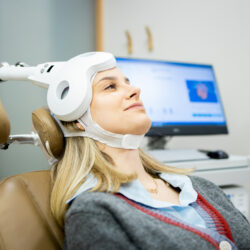





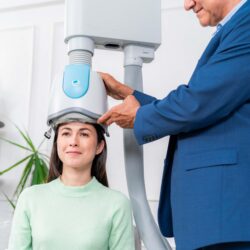



If you or someone you know is considering TMS (Transcranial Magnetic Stimulation) for depression, concerns about memory loss are completely understandable. After all, brain stimulation sounds intense.
The short answer is no. But the concern makes complete sense, and it deserves a thorough, honest answer.
Let’s walk you through where the fear comes from, what the clinical evidence actually shows, and what you can realistically expect for your cognitive function during and after TMS treatment.
Understanding TMS: What It Is and Why It’s Used
TMS is an FDA-cleared depression treatment designed for people with major depressive disorder (MDD), especially those who haven’t responded to traditional approaches.
Here’s how it works: a magnetic coil is placed against the scalp, and it delivers rapidly changing magnetic fields to a part of the brain just behind the forehead that plays a key role in mood regulation, an area doctors call the left dorsolateral prefrontal cortex. These magnetic pulses induce small electrical currents that modulate brain activity without surgery, sedation, or implanted devices.
Unlike an invasive procedure, TMS does not require anesthesia. Patients remain fully awake, can drive themselves to and from each treatment session, and typically resume normal activities immediately.
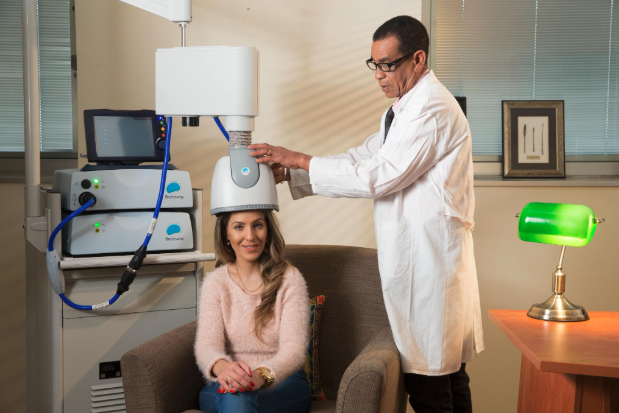
A standard course involves about 5 sessions per week for 4 to 6 weeks, with each session lasting around 20 minutes depending on the protocol prescribed by your physician.
At Oasis, we use BrainsWay Deep TMS, which reaches deeper and broader brain areas than other TMS devices.
Answering the Core Question: Does TMS Cause Memory Loss?
No. TMS does not cause memory loss. Multiple randomized clinical trials and systematic reviews have found no evidence that standard TMS protocols lead to clinically meaningful memory loss or cognitive decline.
A meta-analysis of 15 randomized controlled trials in unipolar depression found no significant deterioration in verbal memory, working memory, attention, or processing speed when comparing active rTMS to sham stimulation. So, TMS does not cause memory loss or cognitive decline based on these findings.
Here’s something important to keep in mind: cognitive symptoms like poor concentration and memory problems can be part of a depressive episode, not just a side effect of having depression.
In fact, one study that followed depressed patients for three years found these cognitive symptoms showed up 85–94% of the time during active depression, but only 39–44% of the time once patients were in remission. So as mood lifts, cognitive symptoms tend to lift right along with it. That’s why many patients undergoing TMS therapy notice sharper thinking and better recall as their depression improves.
That said, for some patients, cognitive symptoms can linger even after mood improves, so ‘better mood’ doesn’t always mean ‘fully back to baseline’ cognitively.
Where Does the Fear of Memory Loss Come From?
The concern about TMS and memory loss almost always traces back to the same source: confusion with Electroconvulsive Therapy, commonly known as ECT or “shock therapy.”
The two are very different treatments.
ECT is a hospital-based procedure that uses controlled seizures induced by electrical currents delivered under general anesthesia with muscle relaxants. It remains one of the most effective options for severe depression and life-threatening mental illness. However, ECT is known to cause temporary memory impairment.
This memory loss is usually most noticeable for the few months right before treatment, though it can sometimes reach back a year or more. For most patients, memory improves significantly within about six months. Research shows roughly 60% of ECT patients report some memory problems, and for about 40% of those, those gaps can stick around for weeks, months, or even years.
TMS, by contrast, uses magnetic pulses at the scalp to modulate neural activity. TMS does not induce seizures, unlike ECT. There’s no general anesthesia, no muscle relaxants, and no recovery room. You walk in, sit in a chair, and walk out.
The CREST-MST trial compared magnetic seizure therapy (a seizure-inducing cousin of TMS) with ECT and found that even seizure-based magnetic treatments caused significantly less autobiographical memory loss than ECT. Standard TMS, which does not produce seizures at all, sits far below either treatment on the memory-risk spectrum.
ECT works well, but it comes with a real trade-off: the stronger the treatment, the greater the chance of memory side effects. This is exactly why many patients look for a gentler way to treat depression, and TMS can be that option when it’s the right clinical fit.
How TMS Affects the Brain: Mechanisms Behind Mood and Cognition
As a form of non-invasive brain stimulation, TMS doesn’t erase or overwrite brain circuits. It works by adjusting the firing patterns of nerve cells in specific cortical areas, essentially turning certain networks up or down rather than resetting anything.
The frequency of stimulation matters here. High-frequency pulses (around 10 Hz) over the prefrontal cortex are thought to boost activity in mood-regulation networks that tend to be underactive in depression. Low-frequency pulses can be used elsewhere to calm down brain regions that are overactive. This is part of why treatment can be tailored from person to person.
Over a full course of sessions, TMS appears to encourage the brain’s natural ability to strengthen and reorganize its own connections. This is likely part of why treatment can improve not just mood regulation, but also cognitive function itself, including attention, working memory, and executive function, the everyday mental skills behind focus, short-term recall, and planning.
This isn’t just theory. Brain scans using fMRI have picked up real changes in how the prefrontal cortex connects with other regions, including the default mode network (linked to internal thought and rumination), after a successful course of TMS. These changes track closely with people actually feeling better and thinking more clearly.
This also explains, on a biological level, why lasting memory loss from TMS is so unlikely. The brain regions TMS reaches during standard depression treatment sit in the prefrontal cortex, tied to executive function and emotional regulation. That’s physically separate from the hippocampus, the brain’s memory-encoding center.
On top of that, TMS’s magnetic fields lose strength quickly with depth, so they don’t reach far enough beneath the scalp to directly affect the hippocampus during a routine session.
What Years of Clinical Trials Reveal About TMS and Memory
Since the first FDA clearance in 2008, researchers have tracked cognitive outcomes across dozens of controlled trials. The pattern holds up again and again: TMS does not appear to cause cognitive decline, and several studies point toward real improvements in cognitive function.
A few examples from the research:
- A meta-analysis of 25 randomized controlled trials, covering about 5,800 participants with Alzheimer’s disease and mild cognitive impairment, found TMS was linked to improvement or stabilization in overall cognition, not decline. Scores on the Mini-Mental State Examination (MMSE), a standard memory and thinking test, improved by a meaningful margin.
- In the FOUR-D study of 153 older adults treated for late-life depression, cognitive testing after treatment showed stable or improved learning and memory scores, with very few participants showing any decline beyond what normal day-to-day variation would explain.
- A 43-patient randomized trial in adults with treatment resistant bipolar depression, a group especially prone to cognitive problems, found cognitive scores improved across every domain tested, including attention, working memory, and verbal memory, in both the active TMS and sham groups.
Similar patterns show up in TMS research for other conditions too, including stroke recovery and traumatic brain injury, where brain stimulation is sometimes used specifically to help improve memory. Across these clinical trials, there is no evidence that properly delivered TMS increases the risk of dementia or long-term cognitive decline.
Common Side Effects of TMS (And How Often They Occur)
The side effects of TMS therapy are overwhelmingly local and temporary. They are not cognitive in nature. Here’s what large studies report:
Side Effect | Frequency | Duration |
|---|---|---|
Mild scalp discomfort | Occurs in about 1 in 10 patients | Usually mild and short-lived, easing within the first few sessions |
Headaches | About 1 in 5 patients | Responds to over-the-counter pain relief |
Facial twitching or facial muscles activation | Common during pulses | Only during treatment session |
Temporary lightheadedness | Smaller subset of patients | Brief, resolves quickly |
Jaw pain | Occasional | Mild, transient |
Mild scalp discomfort occurs in some patients during TMS sessions because the magnetic coil stimulates superficial nerves and muscles under the scalp – not the brain tissue itself. Many patients find this sensation diminishes after the first treatment or within a few sessions.
Temporary lightheadedness can occur during the session but is typically brief and self-resolving.
Serious side effects like seizures are extremely rare, occurring in fewer than 0.1% of patients during TMS sessions (according to research published in Brain Stimulation). Still, to be on the safe side, you are screened for risk factors such as metal implants, aneurysm clips, cochlear implants, and seizure history before starting treatment at Oasis.
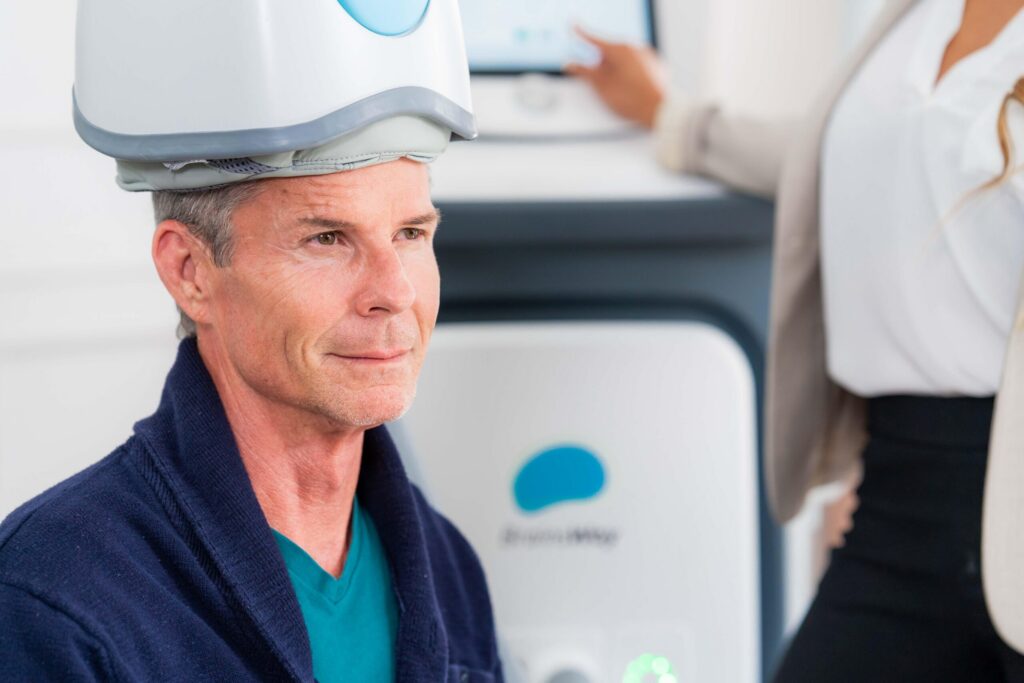
Unlike many antidepressant medications, TMS does not commonly cause systemic side effects such as weight gain, sexual dysfunction, or daytime sedation. This is a significant advantage for TMS patients who have struggled with medication tolerability.
Safety Considerations: Who Should Not Receive TMS?
Careful screening before starting TMS is essential to keeping its strong safety record intact. When you come to Oasis, our team conducts a thorough evaluation before your first treatment, so we can rule out anything that might make TMS unsafe for you specifically.
Key contraindications include:
- Metal implants or devices in or near the head, such as certain cochlear implants, deep brain stimulation electrodes, aneurysm clips, bullet fragments, or other ferromagnetic hardware, since these could move or malfunction during magnetic exposure.
- Vagus nerve stimulation devices, depending on type and placement, may require additional evaluation.
- Active brain tumors, prior neurosurgery, or unstable medical conditions should be disclosed and evaluated before treatment begins.
- A history of seizures, epilepsy, or certain brain lesions may not automatically disqualify someone, but requires individualized risk–benefit analysis.
Standard dental fillings, titanium implants, and most modern non-ferromagnetic hardware are typically safe. Still, the final call should always come from the treating physician, with device specifications in hand.
Certain medications, particularly those that lower the seizure threshold, should be discussed with our team so your stimulation parameters can be adjusted appropriately.
The bottom line: TMS has an excellent safety profile, and proper screening is what keeps it that way. It is also why, before your first treatment at Oasis, we walk through this evaluation with you step by step rather than leaving anything to guesswork.
You Don’t Have to Choose Between Relief and Peace of Mind
If memory loss has been the one thing holding you back from considering TMS, we hope this guide helped put that fear to rest. The evidence points in the opposite direction: most patients describe clearer thinking, not foggier, as their depression starts to lift.
Our team at Oasis Mental Health Centers screens every patient carefully before treatment begins, and we are happy to walk through any question you still have, memory-related or otherwise. If concerns about TMS and memory have kept you from taking the next step, let’s talk it through together.
All it takes is a short conversation to get your questions answered.
Let’s talk about whether TMS could help.
Frequently Asked Questions About TMS and Memory
Can TMS improve memory or cognitive performance?
TMS is not marketed as a way to boost memory, but some research points to modest gains in attention, working memory, and executive function, especially as depression improves. Separately, researchers are also studying targeted brain stimulation for cognitive skills in other conditions, like mild cognitive impairment and stroke recovery, though that is different from routine depression treatment.
Do not expect dramatic or unrealistic memory changes. When benefits show up, they tend to be modest and tied to feeling better overall.
Is it safe to work, study, or drive during a TMS course?
Most TMS patients keep up their usual routine, including work and school, all the way through treatment. TMS does not require anesthesia, and since there is no sedation involved, there is no clear reason to expect it would affect reaction time or driving ability.
That said, if you feel unusually tired or foggy after an early session, it is worth holding off on driving until you know how you personally respond. Our team can talk through your specific situation, especially if you work in a safety-sensitive job.
Can I have TMS if I already have memory problems or a diagnosis like mild cognitive impairment?
A history of memory issues does not automatically rule out TMS, but it does call for careful evaluation. Depression itself can mimic or worsen cognitive difficulties, so treating mood may actually help clarify how much of someone’s memory trouble comes from depression versus a separate neurological process. When you come to Oasis, our team conducts a full evaluation before treatment begins, so we can determine together whether TMS is the right fit for your specific situation.
Anyone with diagnosed dementia, mild cognitive impairment, or a progressive neurological disease should also loop in their primary specialist to discuss potential risks alongside our team.
Does TMS cause brain tumors or structural brain damage?
There is no evidence from research that clinically used TMS protocols cause brain tumors, structural damage, or degeneration. The magnetic fields used in TMS are strong but extremely brief and focused. They do not ionize tissue the way radiation does. Instead, they induce short-lived currents that modulate how nerve cells fire, without burning or injuring brain cells. Based on how TMS works and decades of safety monitoring, there is no known mechanism or reported pattern linking TMS to brain tumors. TMS does not cause memory loss, and it does not cause structural harm either. Our team stays current with this safety research so every protocol we use reflects the latest guidelines.