







If antidepressants and therapy haven’t given you enough relief, transcranial magnetic stimulation (TMS) and Spravato® are two treatments worth understanding. One uses magnetic pulses, the other is a nasal spray. Both work in different ways.
Let’s walk you through what TMS and Spravato® actually are, how they work, who each is generally for, and what treatment looks like at Oasis, so you can have an informed conversation with our team about your options.
Key Takeaways
- TMS and Spravato® are both depression treatments, generally considered when standard antidepressant medication and therapy haven’t provided enough relief from treatment resistant depression.
- TMS is FDA-cleared for major depressive disorder (MDD), including anxious depression. Spravato® is FDA-approved for treatment resistant depression (TRD) and for MDD with acute suicidal ideation.
- TMS uses magnetic pulses to stimulate nerve cells in a specific brain region. Spravato® is a nasal spray that works on the brain’s glutamate system instead.
- As of January 2025, Spravato® can be used on its own for TRD, without a required oral antidepressant.
- Both treatments are personalized to you and monitored closely by our team at Oasis, and we handle insurance verification and prior authorization on your behalf.
What Is Transcranial Magnetic Stimulation (TMS)?
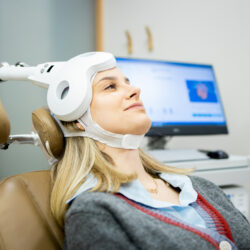
Transcranial magnetic stimulation, or TMS, is a non-invasive treatment that uses targeted magnetic pulses to stimulate nerve cells in a specific brain region. Those pulses come from a coil placed against your scalp during treatment.
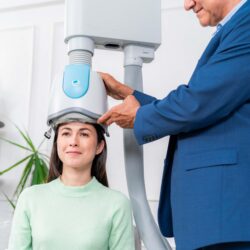
At Oasis, we use BrainsWay Deep TMS, which houses that coil inside a cushioned helmet instead of holding it directly against your head, reaching deeper and broader brain regions than standard TMS devices.
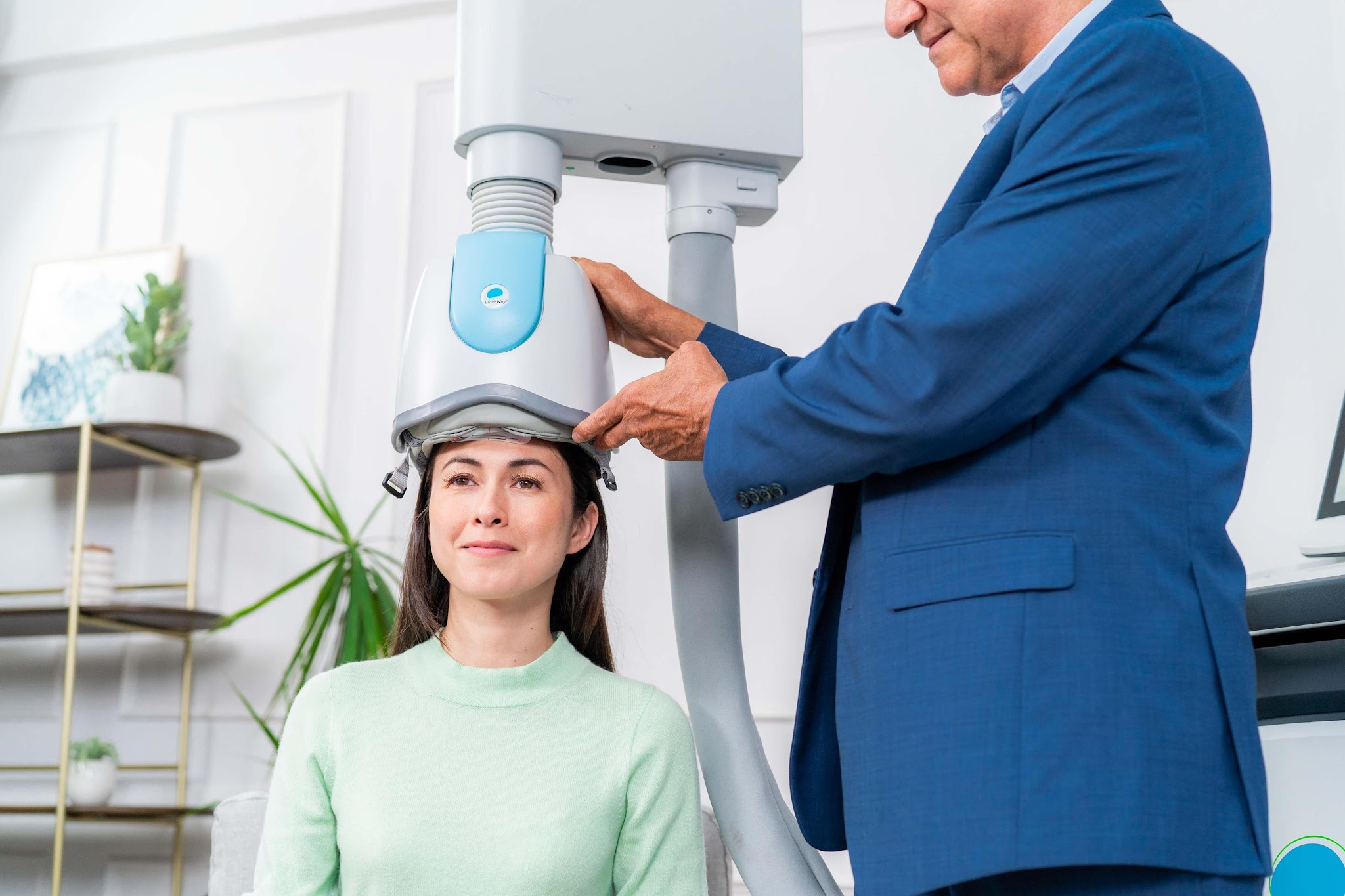
Image courtesy of BrainsWay
The magnetic pulses are aimed at a targeted brain tissue area involved in mood regulation, often the prefrontal cortex. The idea is to encourage brain cells in that area to form new connections and support healthier brain activity, the same kind of activity that tends to be underactive in depression.
A typical TMS session lasts around 20 minutes, and most people come in 5 days a week for 4 to 6 weeks. Here’s what a session generally involves:
- A tapping or knocking sensation on your scalp during treatment
- No anesthesia and no recovery time, you drive yourself home right after
- Mild headaches and scalp discomfort are the most common side effects. Both usually ease within hours and often fade entirely after the first few sessions
That gradual, repeated approach is also why relief tends to build slowly rather than all at once. Most TMS patients notice slight improvements in mood and energy early on, but significant improvement typically appears around weeks 4 to 6.
Because the magnetic pulses can interact with certain implanted devices, TMS isn’t right for everyone. Before starting, our team screens for:
- Metal implants or aneurysm clips
- Cochlear implants
- A history of seizures
Our team checks for all of this during your initial evaluation, well before your first session is scheduled.
What Is Spravato® (Esketamine)?
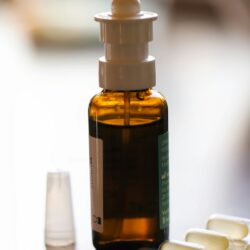
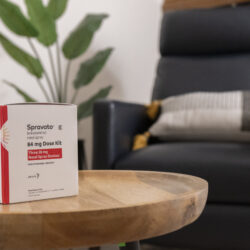
Spravato® works differently. Instead of targeting serotonin or dopamine like traditional antidepressants, it targets the brain’s glutamate system, the brain’s most common messenger chemical. It’s given as a nasal spray, which is why you’ll sometimes see it called esketamine therapy or esketamine nasal spray.
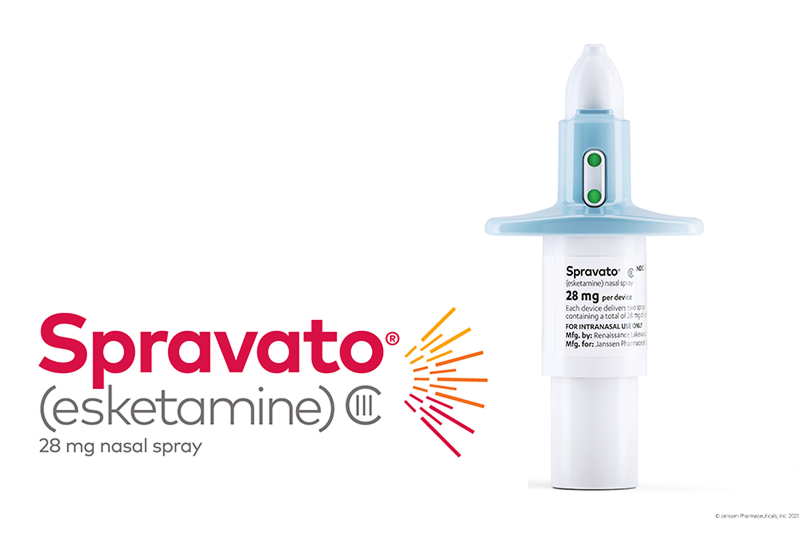
Image courtesy of Johnson & Johnson / Spravato® Treatment Center Communications Toolkit © Johnson & Johnson and its affiliates 2025
Here’s how it works: Spravato® briefly blocks NMDA receptors (N-methyl-D-aspartate receptors), a type of glutamate receptor, which causes a surge of glutamate activity. That surge activates other glutamate receptors called AMPA receptors, prompting the brain to release a protein that helps it build new connections, a process called neuroplasticity. Some patients notice relief within hours to days, much faster than the 4 to 8 weeks traditional antidepressants typically take.
Spravato® is only given under strict medical supervision at a certified clinic. You self-administer the spray, then stay at the facility for at least two hours so our team can monitor you.
During that window, our team watches for:
- Dissociation, a temporary floaty or detached feeling
- Dizziness
- Increased blood pressure
Because of that last point, Spravato® isn’t recommended for people with uncontrolled high blood pressure, since the medication can raise blood pressure during treatment.
Depending on your diagnosis, Spravato® can be used on its own or alongside an oral antidepressant. For treatment resistant depression, the FDA approved it as a standalone option in January 2025. For MDD with acute suicidal ideation, it’s still given together with an oral antidepressant.
Who Each Treatment Is For
Both treatments are generally considered after standard antidepressant medication and talk therapy haven’t provided enough relief, but they tend to fit different situations.
Who TMS Is For
TMS may be a good fit if you:
- Have major depressive disorder (MDD), including anxious depression, and haven’t responded to traditional antidepressants
- Are dealing with persistent depression symptoms
- Want a noninvasive option without systemic side effects
Who Spravato® Is For
Spravato® may be a good fit if you:
- Have treatment resistant depression (TRD)
- Are experiencing suicidal thoughts or suicidal ideation as part of MDD
- Need faster relief because symptom severity is high
The important thing to note here is that neither treatment is a first-line option to treat depression. Both come after a documented history of trying antidepressant medication from different drug classes without adequate results.
Our team reviews your full medical history and prior treatments before recommending either.
What Treatment Looks Like at Oasis
Whichever option fits your situation, treatment starts the same way: a full review of your medical history, prior treatments, and current depressive symptoms, so your treatment plan is built around you specifically.
For TMS therapy, that plan typically means sessions 5 days a week for 4 to 6 weeks, adding up to 36 sessions for the standard depression protocol.
Each session is short, just around 20 minutes, and you’re free to go about your day right after. An experienced clinician tracks your response throughout and adjusts your treatment schedule as needed.
For Spravato®, the plan unfolds in phases:
- Induction: twice a week for the first four weeks
- Transition: once a week for several weeks
- Maintenance: every one to two weeks, sometimes stretching to once every four weeks, for ongoing treatment as things stabilize
Every session includes at least two hours of monitoring under strict medical supervision.
Neither plan is fixed in advance. How you respond shapes the pace, and any adjustment happens together with your healthcare provider at Oasis, not on a preset calendar.
Safety and FDA Status
It’s worth being precise about the FDA language here, since the two treatments are regulated differently. TMS is a medical device, and it’s FDA-cleared, not FDA-approved. Spravato® is a medication, so it’s FDA-approved, not FDA-cleared.
That difference isn’t just wording: FDA approval means a manufacturer had to prove both safety and effectiveness through clinical trials, which is how Spravato® earned its approval. FDA clearance for a device like TMS generally means showing it works similarly to another already-cleared device, a different bar, though TMS has still been studied in its own clinical trials, including the ones referenced below.
Both treatments are backed by clinical trials. In a large real-world analysis of BrainsWay Deep TMS patients, the same H1 Coil technology used at Oasis, 82% of patients responded to treatment after a course of 30 sessions, and 65% reached remission. Remission climbed even higher, to 72%, when measured by the Hamilton Depression Rating Scale, a clinician-rated scale.
Spravato®’s ESCAPE-TRD trial found a 75.9% response rate and 55.7% remission rate, compared to 55% response and 36.3% remission with quetiapine.
Long term improvement matters too, not just the first few weeks. The SUSTAIN-3 extension study found Spravato® remission rates climbed to over 50% after one year, with results continuing to improve the longer patients stayed on treatment. Our team also stays attentive to any long term health concerns as treatment continues, checking in at every visit rather than treating your plan as a one time decision.
TMS vs. Spravato®: Choosing the Right Treatment
Since both treatments target treatment resistant depression, you might want a direct side-by-side look before deciding. Here’s how they compare.
TMS | Spravato® | |
Regulatory status | FDA-cleared | FDA-approved |
How it works | Magnetic pulses stimulate nerve cells in a targeted brain region | Nasal spray that acts on the brain’s glutamate system |
Session length | Around 20 minutes | At least 2 hours of monitoring |
Typical schedule | 5 days a week for 4 to 6 weeks | Induction, transition, then maintenance phases |
Getting home | You drive yourself | Someone else must drive you |
What it feels like | Tapping or knocking on the scalp | Floaty or detached (dissociation), fades within hours |
Time to relief | Gradual, significant improvement around weeks 4 to 6 | Often within hours to days |
There isn’t a universal “right” treatment. It depends on your diagnosis, symptom severity, and what’s worked or not worked for you before. Some depression patients feel strongly about avoiding sedation or dissociation and lean toward TMS. Others prioritize speed, especially if suicidal thoughts are part of the picture, and lean toward Spravato®. Our team talks through both treatment options with you directly rather than assuming one is automatically better.
Both treatments ultimately aim at the same goal underneath the differences: supporting the brain regions and connections tied to mood and emotional regulation.
Insurance and Getting Started
Oasis is a treatment center built specifically around advanced options for mental health conditions like treatment resistant depression, and we handle the administrative side for both treatments.
Insurance coverage for TMS and Spravato® is available through all major New Jersey insurers when prior authorization criteria are met, including Medicare, Medicaid, Tricare, and commercial plans like Horizon BCBS NJ, Aetna, Cigna, and UnitedHealthcare. Most plans require documentation of at least two failed antidepressant trials from different drug classes, plus a confirmed diagnosis. Our team prepares and submits that documentation on your behalf.
Getting started begins with a 10 to 15 minute conversation, where we review your history and insurance before recommending a path forward.
Ready to Talk About Your Options?
Wondering whether TMS or Spravato® is right for you is one of the most natural questions to ask, and you now have a clearer picture of both. At Oasis Mental Health Centers in New Jersey, we walk every patient through exactly what to expect before starting either treatment, so there are no surprises.
If you’re ready to take the next step toward lasting relief from depression, reach out to our team today and let’s find out which pathway is right for you.
Frequently Asked Questions
How much does insurance cover for TMS and Spravato®?
For TMS, without insurance, a single session costs $200, and a full 36-session course runs about $7,200, plus a separate initial psychiatric evaluation fee of $250 to $400. With insurance, most patients pay a $10 to $50 copay per session, bringing a full course to roughly $360 to $1,800 out of pocket, depending on your plan’s deductible and coinsurance.
For Spravato®, with private insurance, most people pay $10 to $250 per session, and the Spravato® WithMe Savings Program can bring the medication portion down to as little as $10 per treatment.
How soon can I actually start treatment?
It typically starts with a consultation, followed by an in-person evaluation at our clinic. From there, we submit your case for insurance prior authorization, which usually takes about one to two weeks, though it can occasionally stretch to two or three. Once that’s approved, we get your first session scheduled. Most patients are in treatment within two to three weeks of their first call, though the exact timeline depends on your insurance.
Do I need to stop taking my current antidepressant to start either treatment?
No. TMS doesn’t require you to stop any medication, and Spravato® is often used alongside an oral antidepressant. Our team reviews your full medication list before starting and only adjusts anything if it’s a safety concern.
Is one treatment faster than the other?
Generally, yes. Spravato® can bring relief within hours to days for some patients, while TMS tends to show significant improvement gradually, often around weeks 4 to 6.
Are the side effects similar?
Not really. TMS side effects are mostly mild headaches and scalp discomfort. Spravato® involves temporary dissociation, dizziness, and blood pressure changes, which is why it requires at least two hours of in-clinic monitoring after each dose.